

White House Ballroom Plan Approved as Legal Battle Looms
Members of the National Capital Planning Commission Thursday vote 8-1 in support of President Trump’s East Wing addition that includes a massive ballroom days after a judge halts its construction.

President Trump’s plans for a new 90,000-square-foot White House East Wing that includes a massive ballroom was approved Thursday by a Washington, D.C., design review commission two days after a federal judge ordered construction work on the site to stop until Congress allows it to move forward.
The National Capital Planning Commission (NCPC), a panel of 12 people, most who were recently appointed by the president, went ahead with the vote because the judge’s order does not impact the action of the commission, NCPC Chairman William Scharf said before the panel approved the final plan 8-1. Two commissioners voted present and one was absent.
“The injunction doesn’t speak to the NCPC review process,” Scharf said. “From my perspective, we have a project before us. We’ve been asked to review it, and that’s really our job here today.”
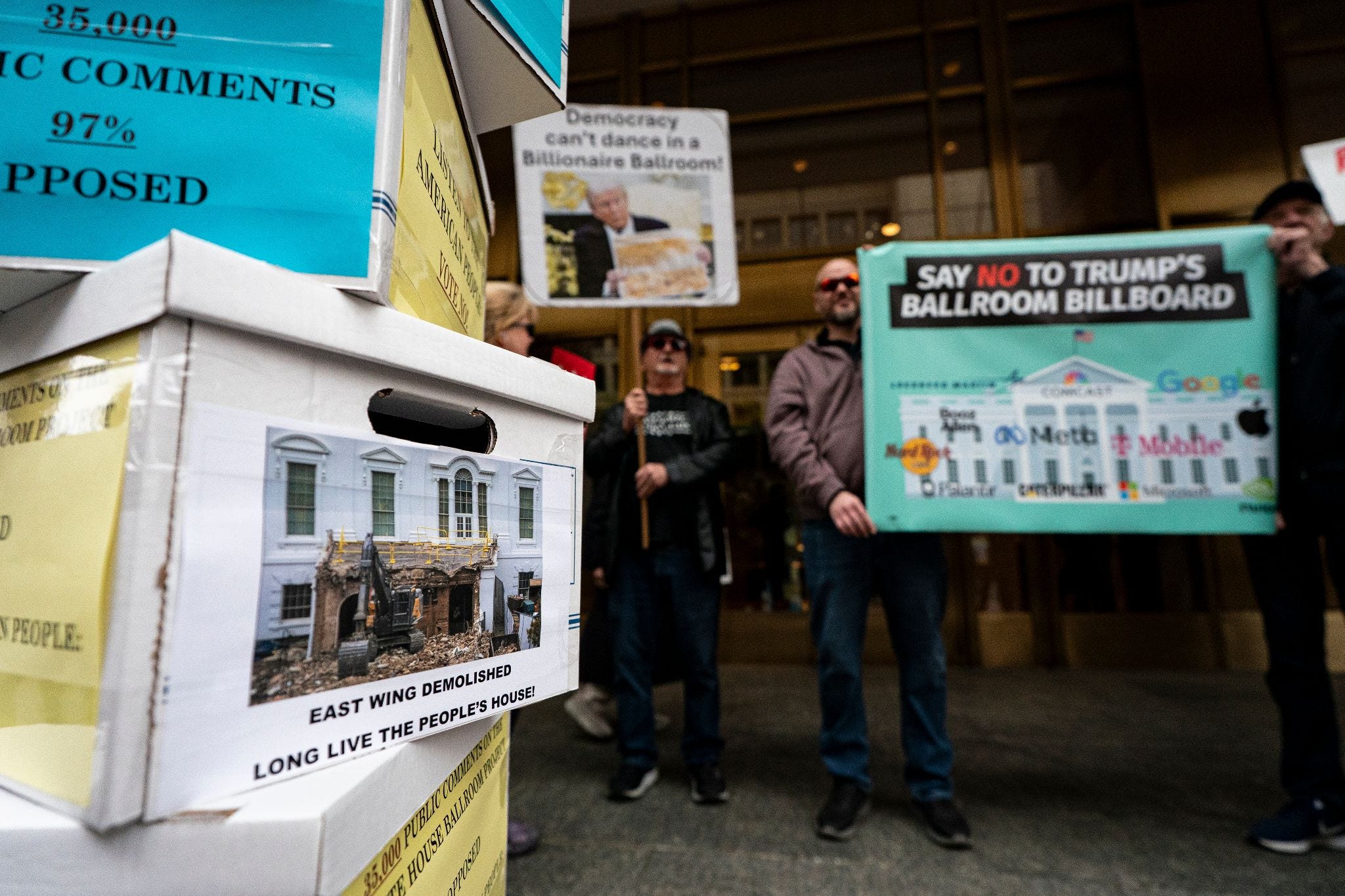
Although the public comment portion of the meeting was closed, demonstrators gathered outside the commission meeting site opposing the ballroom.
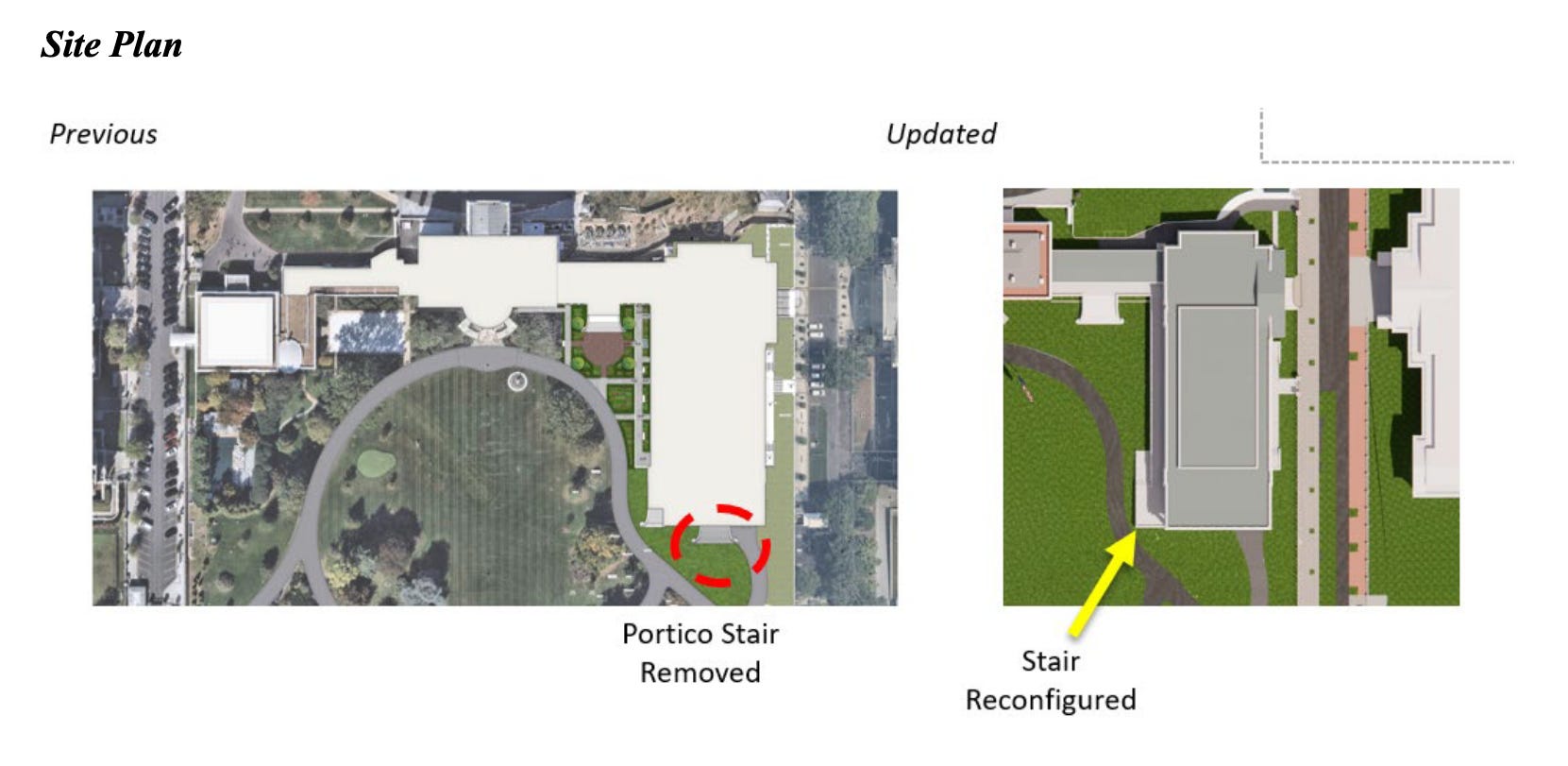
Ahead of the meeting, the White House made exterior changes to the addition. The staircase below the south portico of the ballroom was removed and the southwest staircase was modified to include a switchback, according to a NCPC staff report. The changes do not substantially change the layout or size of the ballroom.
“The elimination of the portico stair, in particular, is an improvement as it helps preserve the hierarchy of the south elevation of the Executive Residence as the primary façade, both visually and symbolically,” the report said.
That prominence of the residence being diminished by the ballroom was a major design concern voiced by industry architects, preservationists and citizens during the public comment portion held by the commission in early March. Other concerns raised included how the proposed plans disturb the symmetry of the White House complex by blocking the axis from the Executive Residence to the Capitol Building and creating a kink in the circular drive on the South Lawn. Of the 35,000 public comments submitted about the project, an overwhelming number of them viewed the ballroom proposal negatively.
In response to those concerns, Scharf said there is nothing new about the White House’s history with structural changes. He pointed to several examples including when it was rebuilt after it was burned by the British in 1814 during the War of 1812 and later when Theodore Roosevelt tore down the White House Victorian-era greenhouses and built the West Wing in 1902. In 1942, during World War II, the East Wing was constructed over an underground bunker.
“While some might wish for history in the world to stand still, the fact of the matter is that the White House complex has constantly evolved to meet the programmatic needs of the federal government and the office of the president,” Scharf said. “I believe that in time, this ballroom will be considered every bit as much of a national treasure as the other key components of the White House.”
President Trump’s privately-funded “East Wing Modernization Project,” which is now estimated to cost $400 million, includes the 22,000-square-foot ballroom that will seat 1,000 people, a new Office of the First Lady suite, commercial kitchen, theater, two-story East Colonnade and outdoor garden area. The size of the ballroom spans nearly 300 feet long—the size of a football field—and has a ceiling height of about 40 feet.
The lone vote against the plan came from Commissioner Phil Mendelson who said the issue for him was not whether there should be a ballroom, rather its design.
“We don’t have to choose between respecting our history for the American people and accommodating modern government’s needs,” said Mendelson, chairman of the Council of the District of Columbia. “We can do both. Doing both, however, requires time and that we move deliberately.”
He went on to say that comments submitted from experts in the industry shared that a smaller ballroom could still be built to hold 1,000 people. He also desired to see more analysis on the ballroom’s square footage needs and its height, which was not provided.
Even with the latest modifications to the exterior of the ballroom, Mendelson said, “It’s just too large.”
A White House official told The Associated Press that the president had considered comments from the NCPC, the U.S. Commission of Fine Arts (another federal panel that already approved the project) and the public.
The commission’s approval was considered the last hurdle to clear before above ground work on the addition could begin. Federal District Judge Richard J. Leon’s decision on Tuesday ruled in favor of the National Trust for Historic Preservation, a nonprofit organization chartered by Congress that sued the president and other agencies of the government on December 12, 2025. The National Trust asserted in their lawsuit that ongoing construction of the White House ballroom is unlawful and asked the court to halt construction until the government complies with the law by going through the legally mandated review processes, including approval from Congress.
Judge Leon granted the National Trust’s request for a preliminary injunction because, he said in his opinion that “no statute comes close to giving the President the authority he claims to have.”
The preliminary injunction stops the construction except work required for national security purposes for the next two weeks. The court’s action was President Trump’s first significant setback with the project. The president said he would appeal the decision.