Your First Ladies Man
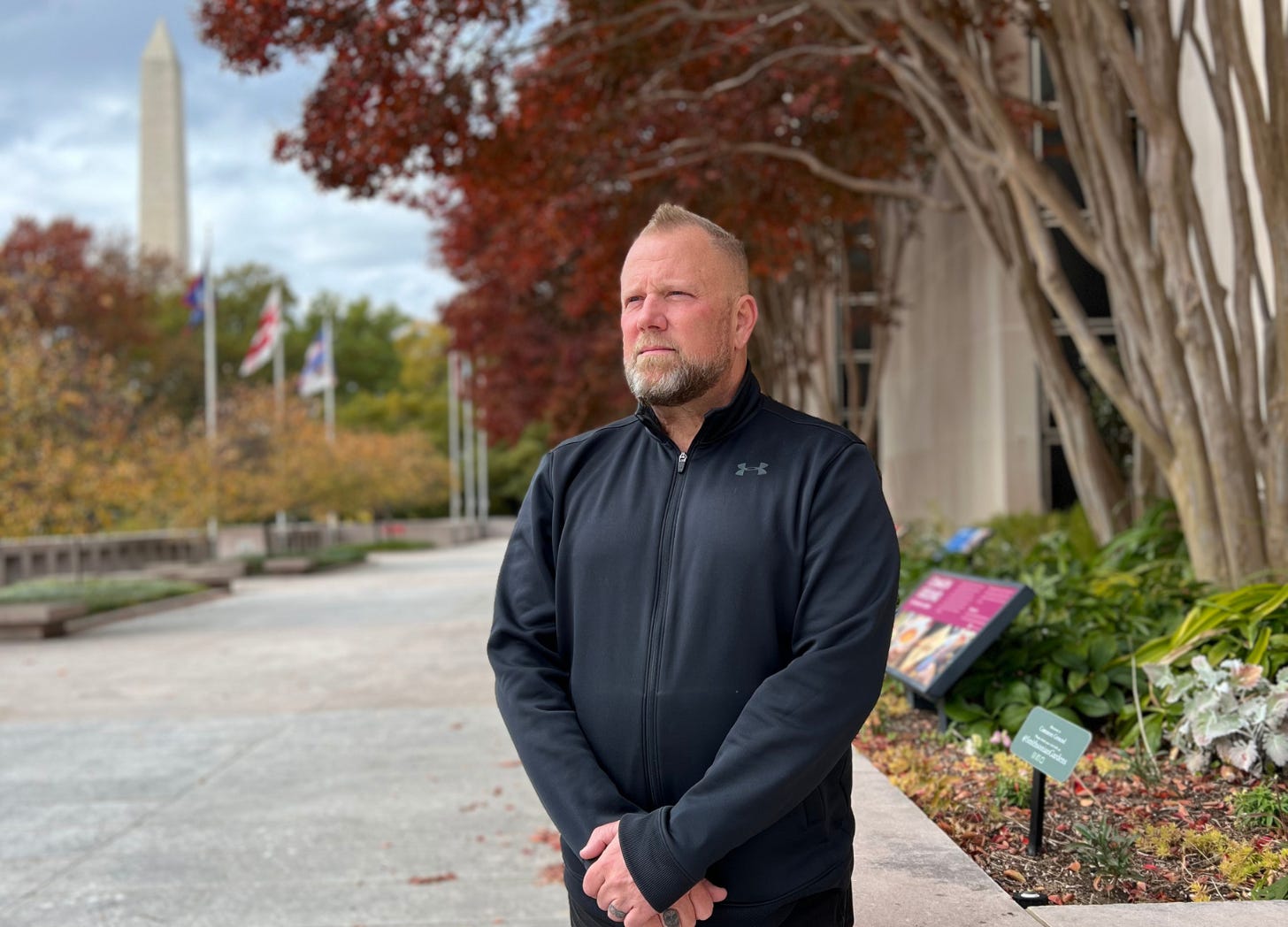
Andrew Och is an unexpected ambassador for America’s first ladies.

That rain-soaked November day in Plains, Georgia, in 2013 was the day the past nearly caught up to the present.
Andrew Och had just finished eating dinner at the Historic Inn and Antique Mall on Main Street where he was introduced to First Lady Rosalynn Carter’s niece Kim Carter Fuller, director of the Friends of Jimmy Carter in Plains. Och, finishing the day’s special–chili cheese dogs and peanut butter ice cream—shared how he spent his time alongside the lead park ranger capturing film footage of key biographical sites and artifacts that mark the life of Mrs. Carter, the former president’s wife of 77 years and the first lady of the United States from 1977 to 1981.
“Plains isn’t big,” Och explains to me on a recent brisk, sunny day in Washington, D.C., more than a decade later. “But there’s a lot to see for President and Mrs. Carter … those lives even more so than any other president and first lady in history intertwine.”
Then other facts rolled off the tip of his tongue. Jimmy Carter met Rosalynn the day she was born, Och quickly notes. And the Antique Mall? That was a town endeavor Mrs. Carter had helped with, too, he adds.
After Och finished his dinner on that day in 2013, he returned to his room at the Historic Inn where the real work began. Och, at the time, was a field producer for the acclaimed “First Ladies: Influence and Image,” a two-season, weekly live C-SPAN television series accompanied by an interactive website that was produced in collaboration with the White House Historical Association. The series aired over 2013 and 2014, examining every first lady from Martha Washington to Michelle Obama.

In his hotel room, transformed into a satellite command center, he began the taxing effort of transferring the media, teeing it up for producers back in the Washington, D.C., studio. With wires plugged into every available electrical outlet, Och mastered the methodical equipment routine as he neared the end of filming the landmark project. At the same time, he prepared for his next trip to California to conduct interviews and film footage about former First Lady Nancy Reagan (1981-1989) before a quick stop in Washington, D.C., to hand off the Carter content to C-SPAN in-studio producers.
But first, as Och often did while on the road, he flipped on the television and tuned in to the series airing live.
“I watched the Nixon show while I was in Plains gathering the Carter content,” he recalls.
As the program played, so did the constant deadline pressure in his mind—on a loop—to which he’d become accustomed. The decades were inching closer, like a lengthening shadow cast from the sun.
It was a race against time, a race against the past.

‘You got to get going’
Coming into the first ladies series, Och had all the credentials. He was a television producer at various networks working on Capitol Hill since 2000, he traveled with presidential administrations and he worked on President Bill Clinton’s final State of the Union. Och also helped cover the 2000 election night when no clear winner emerged, but ultimately resulted in Republican George W. Bush narrowly losing the popular vote to Democrat Al Gore and winning what Och called the “longest election in U.S. history.”
In the fall of 2012, Och was working on the C-SPAN series Washington Journal when a colleague had suggested he apply for a contractor producer position for an upcoming series that would be a companion to the award-winning C-SPAN series called American Presidents: Life Portraits. This one would focus on American first ladies.
It wasn’t a hard sell. Och, who runs his own multimedia company, likes to travel and tell stories, especially untold stories. What he didn’t know, though, was much about America’s first ladies.
“I couldn’t name them all. I didn’t know their histories,” he admits. “A lot of the history I did know was false.”
What the series was looking for in a solo field producer, according to Mark Farkas, executive producer of “First Ladies: Influence and Image,” was a person who could deliver video footage from a birthplace, a childhood home and a place where the first lady and president lived.
“We had to find somebody crazy and talented enough to do it,” Farkas tells East Wing Magazine in a recent Zoom interview.
And Och blew away the competition mostly with his personality. It was important, notes Farkas, that the field producer get along with the range of people they’d have to deal with—people in first ladies and presidential circles to museum directors to National Park Service site operators.
“He wasn’t an expert on first ladies, neither was I, but he was a quick study,” Farkas says.
The first show would air on President’s Day 2013. Och was handed a large red phonebook-sized book containing The First Ladies Fact Book, by Bill Harris and revised by Laura Ross, and information about historical first ladies locations. With that, he combed through the pages reading and planning and, along the way, collecting other books about these women.
“‘You got to get going,’” Och recalls being told by Farkas.
It wasn’t clear at that time what exactly the 90-minute, live show would look like. It would be hosted by Susan Swain, a co-CEO of C-SPAN, who would interview first lady biographers and historians, including regular Richard Norton Smith, in a specially-designed studio and give viewers the opportunity to call in. Other C-SPAN producers would conduct in-person, sit-down interviews with three then living first ladies—Barbara Bush, Laura Bush and Rosalynn Carter.
The directive, however, couldn’t have been more clear. Och recalls Farkas saying: “We want you to be Indiana Jones. Go into the places, go into the vaults.”
Och was equipped with video cards, a camera and seven bags of gear including a backpack where he kept his camera, the media and hard drives. “I treated them like gold,” Och says.
Before he set off, Och set up a huge whiteboard, a central command of sorts, next to a poster-size map of the United States in his C-SPAN cubicle that guided him through what would be more than 80 locations.
“My job was to go at breakneck speed, as fast as I could, as efficiently as I could, spending as much time as I needed in every single location that I could find and get myself to within the time to make the show,” Och says.
So, he started close to home.
On the road
On a November morning in 2012, Och set out in his Dodge Durango traveling south on Interstate 95 from his home in Shadyside, Maryland. He headed to his first filming stop—The James Monroe Museum in Fredericksburg, Virginia. As part of the first leg of a five-day trip to cover seven of the women of the U.S. presidency, Och began with Elizabeth Monroe, wife of James Monroe, the fifth president of the United States (1817-1825).
As the highway stretched out in front of him he remembered thinking of his childhood.
“You know, my family had driven to Florida to Disney World when I was a kid in the giant white family station wagon,” Och tells me, adding there was a similar, palpable sense of excitement in the early miles on the road for the project. He has a distinct memory of trying to pace himself.
Och’s enthusiasm about first ladies may have been born from the on-the-road filming of the television series, but that’s not where his interest in history began. When he thinks back on it, he credits that to his mother, who was a schoolteacher, and his father, a Civil War buff.
There are childhood memories like the one in the back of the station wagon that, in hindsight, show the building blocks of who the young Andrew Och might become. There was the time in their backyard when his mom explained to him how they could make stop-action images with their Super 8 film camera. Or, when his mother, the civically-minded Julie Och, took him out of school his sixth-grade year to attend Ronald Reagan’s Inauguration Day parade because she told him “this is what we do” regardless of who ultimately wins the election. There they stood on a cold January day in 1981, next to a reporter, waiting for the motorcade when the reporter told the young Och to hold his Kodak 110 camera high above his head and he would hoist him in the air. When the president and first lady passed by, he told Och, “Just snap, snap, snap, snap!”
Upon reflection, Och believes he wouldn’t have been there, and perhaps not now here, without his mom, who he dedicates the two-volume book series Unusual for Their Time: On the Road With America’s First Ladies he wrote about his experience filming the series.
“Nancy Reagan holds a very important first ladies tie to me for that,” he says.
When Och arrived at The James Monroe Museum the gravity and scale of the project began to sink in when the museum director, Scott Harris, greeted him and then inquired about who else was with him. It was the first time Och was asked, but it wouldn’t be the last.
“I’d be like, ‘It’s just me, man, nobody else is coming,’” Och says, noting being solo in the field worked to his advantage in creating rapport and relationships with experts.
The day was well planned between Harris bringing out artifacts and a scheduled sit-down interview with Monroe historian Daniel Preston from the University of Mary Washington, who would later join the live show in the studio.
The museum showcases one of Elizabeth Monroe’s piano fortes from the 1790s, which was believed to have been used in the White House, and their personal White House china. There were smaller items, too, such as an ivory memo pad that was about the size of a credit card. Each day of the week was carved and embossed on individual cards that Mrs. Monroe used to keep notes or shopping lists with a charcoal pencil.
But, it was an artifact unlike anything Och had ever seen before that made this first stop particularly memorable. In the museum’s collection is a pair of “hair jewelry” woven from Mrs. Monroe’s own hair. The earrings, a symbol of endearment and later mourning to loved ones, were commonplace in the 18th and 19th centuries, Preston, editor of The Papers of James Monroe, explains in the series.
For Och, though, artifacts like the hair earrings that he had the opportunity to hold ignited a spark of interest in these women.
“I was holding jewelry made from the hair of the fifth First Lady of the United States. Stop one. Trip one. Season one. UNBELIEVABLE,” he writes in his book.
Notably, Elizabeth Monroe and her husband are remembered for their efforts to refurnish the White House after it was rebuilt as a result of the British setting the White House aflame during the War of 1812. The furniture, historians note, from the Monroe era was a suite of gilded wood furniture by Parisian cabinet maker Pierre-Antoine Bellange. Several Bellange pieces have been acquired and placed on display in the White House Blue Room ever since, including in 2020 a restored fire screen.
It was also Mrs. Monroe’s bravery for which she is famously remembered. In 1794 during the French Revolution, she visited the imprisoned Marie-Adrienne Lafayette, wife of the American Revolution hero Marquis de Lafayette, and saved her from the guillotine by securing her release.
“It is one of my favorite political, theatrical stunts in world history,” Och says. “I thought, these women are so much more significant.”

First ladies and logistics
Although he was rarely there, Och’s cubicle at C-SPAN provided a window into the status of the series. There was a whiteboard where he listed the first ladies in order, the way the series unfolded. And there was a map, which illustrated just how tricky it would be to crisscross the United States visiting sites in an order that made sense.
“You can’t go see Abigail Adams in Massachusetts after you’ve seen Martha Washington in Virginia,” Och explains. Logistically, a chronological approach wouldn’t get the job done on time or on budget.

So, he clustered his visits. In Virginia, where he started, Och covered seven first ladies collecting footage for Martha Washington, Martha Jefferson (who died 19 years before Thomas Jefferson was elected), Dolley Madison, Martha “Patsy” Jefferson Randolph (White House hostess and daughter of Thomas Jefferson), Leticia Christian Tyler, and Julia Gardiner Tyler in addition to Elizabeth Monroe.
Another map hung in Farkas’s office tracking Och because, Farkas says, “my boss wanted to know where the heck he was.” People in the C-SPAN office were curious, too, stopping by his office to check on Och. Farkas likened the map to “Where’s Waldo?” only it was “Where’s Andy?”
And as the series explored each subsequent first lady throughout the historic geographical growth of the United States, the trips would become more frequent, spread out and illuminating.
By the time January 2013 rolled around, Och had already read up on the lesser-known Jane Pierce, the wife of Franklin Pierce, the 14th president of the United States (1853-1857). When he reflects on images of Jane Pierce in his book, Och calls her a silent beauty whose reputation was treated unjustly, unfairly and, as he discovered at the Pierce Manse in Concord, New Hampshire, incorrectly.
“Her life story is rather tragic,” he writes in his book.
Before Franklin Pierce was elected president, the couple had already endured the loss of two of their three children. And just prior to the inauguration, Jane Pierce’s uncle died prompting the couple to attend the funeral before departing to Washington, D.C. While traveling home from the funeral by train in Andover, Massachusetts, on January 6, 1853, an axle on the rail car the family was traveling in broke, causing it to careen down a 20-foot embankment and break apart. The young Benjamin was killed instantly in front of his parents.

The tragedy prompted Jane Pierce to skip her husband’s inauguration and to display mourning bunting around the White House for more than two years, where she was described as a sickly, grieving recluse during her husband’s single term.

There is a heartbreaking letter written with pencil by Jane Pierce to her deceased son in the care of the New Hampshire Historical Society that begins, “My precious child, I must write to you, although you are never to see it or know it.”
The circumstances Jane Pierce faced upon assuming the first lady role stayed with Och more than a decade after filming the series. Och captured footage of the letter and obtained footage of the nearby rail tracks where the Pierces’ son died.
Och challenges early historical characterizations of Jane Pierce given the depth of her sorrow by asking future readers, “What would you have done?”
The final stop
It was a cold night in December 2013 when Och arrived in Fayetteville, Arkansas. This was the final stop for footage yet to be collected on Hillary Clinton who served as first lady during her husband Bill Clinton’s two-term presidency from 1993 to 2001. She would go on to be elected as a United States senator in New York, the 67th Secretary of State under Barack Obama and the first female Democratic nominee for president in 2016.
The series debuted on President’s Day and it would end a year later on the same holiday. Like any broadcast, there were hiccups along the way. Among them, Och and Farkas agree, was the longest government shutdown in history at the time, making presidential centers and historic sites operated by the National Park Service inaccessible. And, there were all the times the live series was preempted by the government in action.
The biggest hiccups, though, Farkas says, were really what Och encountered to keep the footage flowing against the unrelenting deadline pressure.
“I mean getting into hotels at 2 o’clock in the morning and leaving at 6 o’clock in the morning, being an expert on Lou Hoover one day and then three days later talking to an expert on Nancy Reagan,” Farkas recounts.
There was a set deadline to receive the content six days before it aired. The nature of broadcast news doesn’t lie, Farkas says, recalling tense moments when content was still being edited two hours before the show aired.
“If you’re doing a live production something is going to come down to the wire. [It] always does no matter how long you plan ahead,” he says.
Och always plowed ahead.
The amplification of stories, like Jane Pierce’s, impressed Farkas. But, there were countless other stories from the very first show to the end that Och brought back that were unusual—just like the title of his book—that people didn’t realize they were hearing for the very first time.
“I’m in the studio for each show,” Farkas says, “And, he’s doing a pretty damn good job.”

But even with the finish line in sight as the series was wrapping up, Och hit another snag. The plan was to travel to the William J. Clinton Presidential Library and Museum in Little Rock, Arkansas, for footage, but the request to do so didn’t get approved by their board by the series’ deadline.
“The Clinton campaign machine was in the process of battening down the hatches for the 2016 campaign, so I understood,” Och writes in his book.
Undeterred, Och pivoted to Fayetteville, where the Clinton House Museum was located.
Up on a hill not far from the University of Arkansas was a small Shaker-style house with a large chimney, the focal point of the brick and stone exterior. It was situated on Clinton Drive, renamed from California Boulevard when it was changed by the city in 2010, according to Och.
There, he met with Director Kate Johnson, who personally knew the Clintons, and began with a little-known story about the couple at the time. It was 1975 and Bill Clinton was working at the university as a professor while Hillary lived and worked in Washington, D.C., as a member of the impeachment inquiry staff advising the House Judiciary Committee during the Watergate scandal. One day, the Clintons drove past the house when Bill was driving Hillary back to the airport. She mentioned what a cute house it was and noted it was for sale, Och writes in his book.
“By the time she came back to Fayetteville, he had bought the house and prepared for yet another (fourth) proposal,” Och continues. “He told her he bought the house and that she would have to marry him because he couldn’t live there all by himself.”
They married on October 11, 1975 in the living room of that house. It was a captivating story that, Och tells me, got the series “over the hurdle and to the finish line.”
On that final show of the series on President’s Day, there was a panel in the studio discussing the series and live phone calls taken from viewers. There were highlights of all the footage from Och’s trips that was edited together into a three-minute clip. In hindsight, Och ponders how that epic travel web all worked out.
“I drove. I rode. I flew. I transferred media. I stayed up late. I had no sleep. I ran myself ragged,” he tells me. It wasn’t without a cost. By the end, Och says he needed glasses, shots of cortisone in his back and hip and multiple rounds of antibiotics from walking pneumonia. “Life was put into this series because I wanted to do it and the first ladies justice.”

The man and the brand
On another frigid January day just last week, Och spoke into his camera, his breath visible with each word as he sipped a hot beverage and quipped about a historic snow storm making its way east. He shared with his social media audience that on this day musician Paul Simon released his first solo album “Paul Simon.” He then pivoted to former First Lady Pat Nixon who “was quite a singer herself” and shared when she was first lady how she loved hosting performers at the White House before signing off: “I’m Andrew Och, your First Ladies Man.”
It was during that dreaded government shutdown as the series was running when Och saw a glimpse of what his future might hold. In fact, it was a conversation with Brian Lamb, founder of C-SPAN, who told Och that he had gone places he’d never been and seen things he’d never seen. And, pop! That’s when the idea of public speaking first took shape and the beginnings of what would become a new title and brand—First Ladies Man.
The idea was born, you could say, from the cutting room floor. There were filming days during the series when Och would spend 10 hours at a location collecting hours of footage that would ultimately be condensed into three-minute pieces or, for some programs, 15-minute pieces.
His enthusiasm, Farkas recalls, was at times difficult to contain.
“He was so into what he was doing,” Farkas says. “You sort of had to curb him from time to time because I just didn’t want him doing work that wasn’t going to make air.”
On the last day of the live show visiting in the studio was Anita McBride, former chief of staff for former First Lady Laura Bush and currently the director of the First Ladies Initiative at American University’s School of Public Affairs, who asked the series team, including Och, what they learned from the experience. All he thought of was how much they just informed the American public about first ladies and how much of that footage, to Farkas’s point, never made it to air.
“Think of how many hours and days and weeks of footage exists on these first ladies that has not seen the light of day,” Och says.
The series might have ended, but that would not be the finale for Och.

He really didn’t want to write a book about his experience. That, he says, sounded like hard work. But, he was convinced to do so because it would help him do something he liked—speaking and sharing stories. In 2016, Tactical 16, known now as Black Vellum Publishing, released the first volume of Unusual for Their Time: On the Road With America’s First Ladies, that covers his first ladies travels from Martha Washington to Ida McKinley. A year later, the second volume was published, bringing readers all the way to Melania Trump during her husband’s first term as president. The title, he says, reflects what experts routinely told him about first ladies during the filming of the series—that the women were “unusual for their time.”
The books were the vehicle for getting everything out he wanted to share about first ladies and his travels that he couldn’t fit into a speech.
“It fulfills my responsibility for the access I was given and what I saw and held and experienced … that I couldn’t put into the television series,” says Och, who takes first ladies seriously, but not himself so much.
His first speech about first ladies and his C-SPAN experience had an unexpected soundtrack and, oddly, smoke machines.
“I came out to Jimi Hendrix’s ‘Foxy Lady’ and ended with Styx’s ‘Lady,’” he recalls, admitting it was “grandiose and ridiculous.”
A self-described big thinker, drummer and Harley Davidson rider, Och eventually came back down to earth and began to think hard about the main purpose of it all. For him, the answer was unquestionably to invigorate and convey his passion for a sorority of women—America’s first ladies—who most people know nothing or almost nothing about.
In those early days after the series, Och remembers thinking if it goes no further than selling 100 books and his first four speeches, then he has still done something few people have done.
His goal was to sell 1,000 books in a year. Now, more than 350 speeches later, Och has sold more than 5,000 books with no marketing budget. It has also led to other opportunities that support educating the public about first ladies including serving on the National First Lady’s Day Commission that is advocating for the establishment of a federal holiday commemorating first ladies; taking part in the Missouri Cherry Blossom Festival in Marshfield, Missouri, that honors first ladies; leading the newly created NFLDC National Historic First Ladies Trail that was inspired by his travels during the first ladies television series experience; and recently becoming a lifetime individual member of the First Ladies Association for Research and Education.
So when asked, what next?
Och says: “Nothing.”
And by nothing, he means people captivated by his talks often suggest he should expand and talk about presidential family members or presidential pets. But, he insists, first ladies remain his focus.
So, he continues to relive his journey, which began more than a decade ago on a car ride through the Virginia countryside with each booked interview and speaking engagement. The curiosities surrounding Och, an unexpected ambassador of first ladies and their stories, show no signs of ending.
“This is a journey that doesn’t stop until I stop,” Och says. “I will continue to talk about these women because they’re that important and it’s just giving credit where credit is due.”
Correction: This story has been updated, correcting a part of the article that misstated how the books Unusual for Their Time: On the Road With America’s First Ladies, Volumes 1 and 2, were published. Both volumes were published in 2016 by Tactical 16, known now as Black Vellum Publishing.
East Wing Magazine’s mission
We are an independent, journalistic-driven publication dedicated to objectively covering presidential first ladies present and past, regardless of political affiliation. First ladies’ causes, initiatives and actions can have lasting impact on society. Tracking their work and the work of those who study the women contributes to the historic arc of America’s presidential spouses as figures in their own right.
If you like what you see and enjoy this community, please consider becoming a paid subscriber.


