


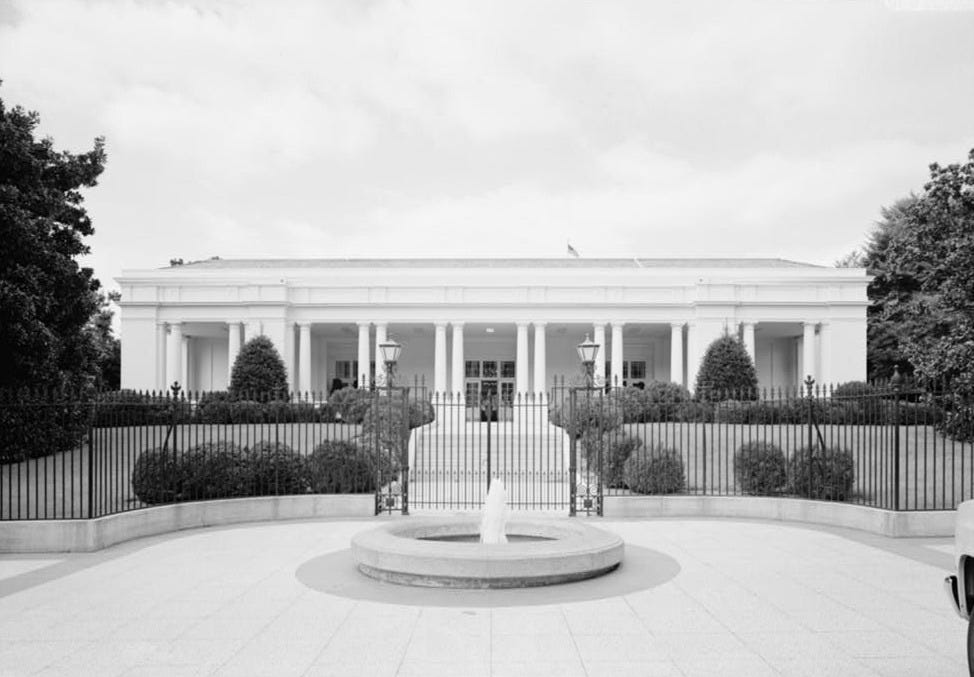
Azadeh Moaveni opens her forthcoming book chronicling the evolution of power forged from decades of first ladies and their staff making up the White House East Wing at the moment of its destruction.
When the East Wing—the working hub of the first lady—was demolished, she explains, it was done so without consideration for the influence that presidential spouses have wielded from the building.
On October 20, 2025, a construction crew began tearing down the two-story structure to make way for President Donald Trump’s vision of a massive ballroom dominating a new, modernized East Wing. The new building is currently rising in its place, Moaveni writes in The East Wing: Power, Intrigue, and the Untold Story of America’s First Ladies, and is still “profoundly unsettling.”
That’s because it housed a history critical to Moaveni’s expertise, which she describes as an invisible mode of power that dazzles—soft power.
“First Ladies began amassing real power at the same time women were fighting for, and gaining entry into, political life,” she writes in the introduction. “The evolution of the role, as well as the growth of the Office of the First Lady, is entwined with the broader story of women’s equality.”
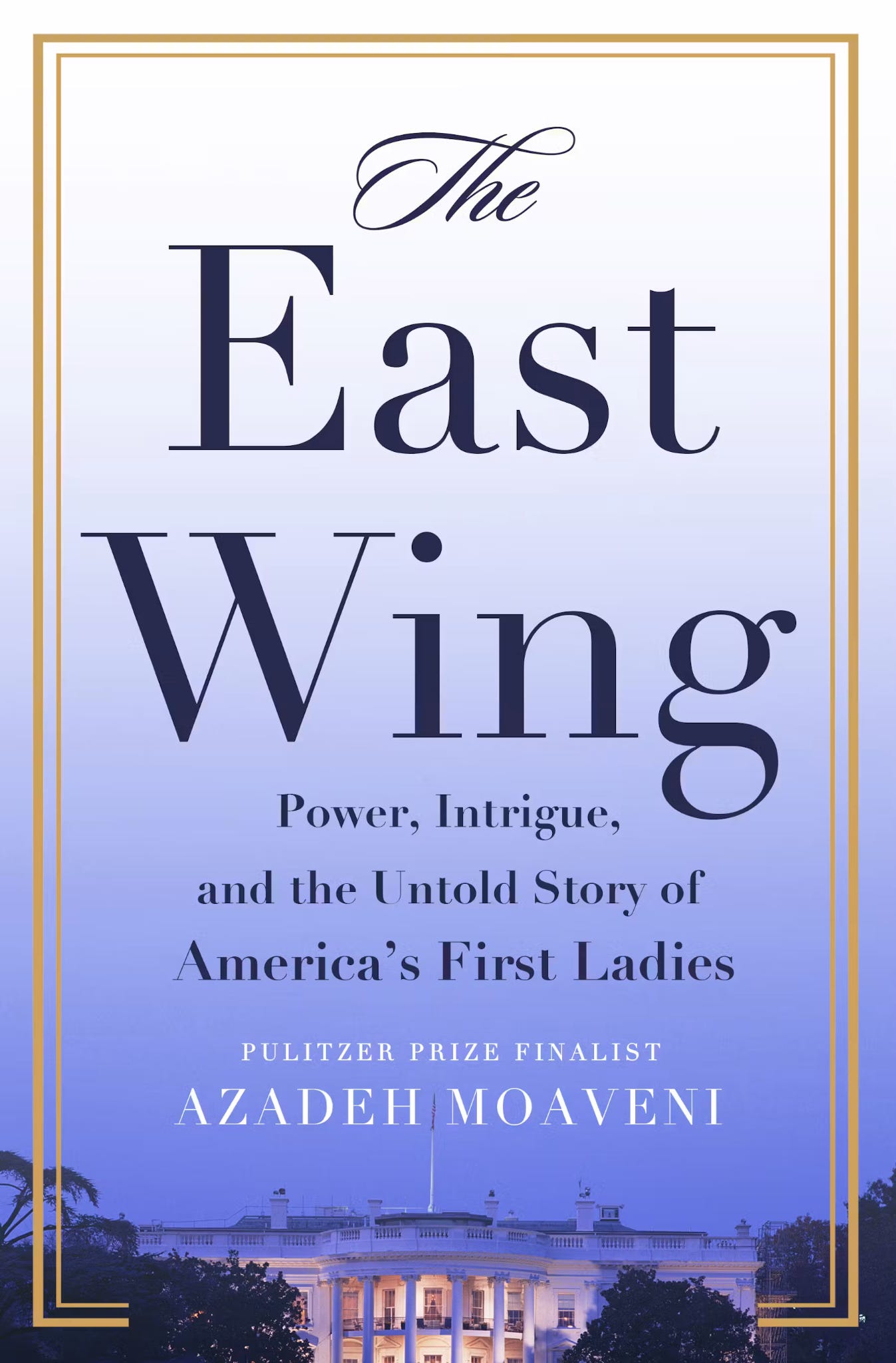
Her book, to be released on Tuesday, examines the growth of that influence and how those working out of the spotlight on behalf of the first lady helped advance the role, and in turn, opportunities for women. It charts the continued development of the East Wing by touching on every first lady from Eleanor Roosevelt through the second tenure of Melania Trump. Throughout its 366 pages, Moaveni documents an array of titles—social secretary, staff director, press secretary and chief of staff—bestowed on staffers, some that are fitting and some that are a catch-all for wide-ranging duties.
The early titles demonstrate the challenges of the Office of the First Lady, where the origins of professionalization were just starting to emerge. At times, the first lady’s gusto was amplified by an equally ambitious staff. Other times, the first lady tamped down the expectations of her role and the staff also contracted.
Nonetheless, Moaveni touches on the early 20th century when First Lady Edith Roosevelt hired Belle Hagner as the first-ever social secretary to a first lady. Glimmers of aides flickered with succeeding first ladies until Eleanor Roosevelt operated a staff of two—Malvina “Tommy” Thompson, her secretary; and Edith Benham Helm, her social secretary inherited from the Woodrow Wilson administration. The duo, with Mrs. Roosevelt in command, firmly plotted a new direction for the Office of the First Lady.
“Eleanor Roosevelt was such a marker,” Moaveni tells East Wing Magazine in a recent phone interview describing the book’s opening chapter “The Architect”. “She, in her profound way, carves out the dimensions and space for an entirely different kind of role.”
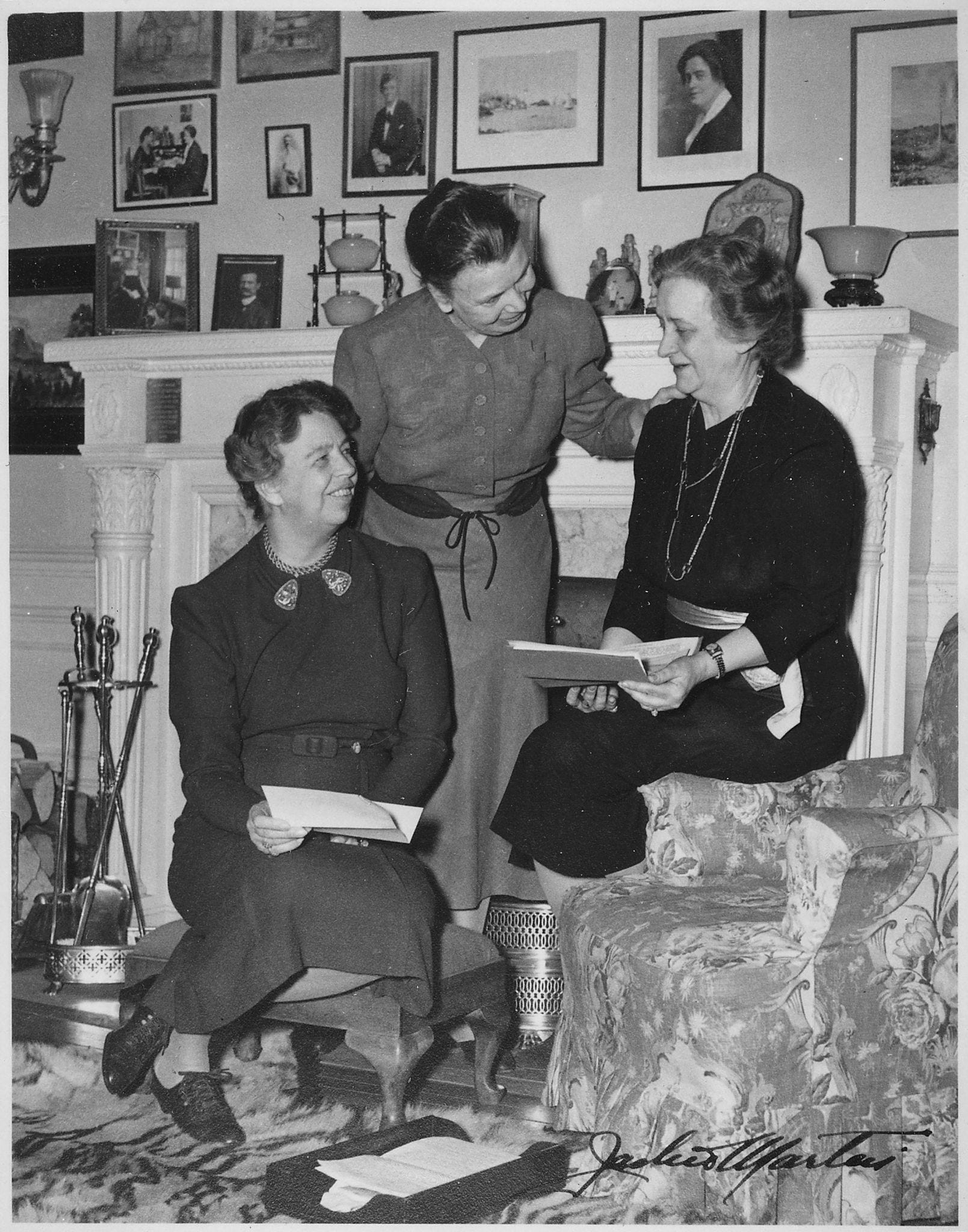
Mrs. Roosevelt served as first lady from 1933 to 1945—spanning the Great Depression and World War II—but, according to Moaveni, there was no suite of offices because there was no need. Before Eleanor Roosevelt, no other first lady had operated as a diplomat on the world stage, had driven a social justice policy agenda or had used the media to shape public opinion, she explains.
This, Moaveni notes, seemed like a meaningful place to start her book, which she describes as an overlapping story of the role and the office as well as one of “how the demands of a growing role for the principal create demands for an entirely different kind of office.”
Thompson’s story, in particular, has not been considered in its own right as a key character in the origin story of the East Wing, Moaveni writes. The opaque title of “secretary” dilutes her instrumental and intentional invisible work.
Thompson helped Eleanor Roosevelt run her all-female press conferences, acted as the first lady’s gatekeeper (akin to a chief of staff) and interacted with the president’s staff and aides to world leaders in addition to fielding memos. She is the combination of a top-level political aide and a lady in waiting, writes Moaveni. She also manages Eleanor’s family, including the daughters. Thompson brings the structure to Eleanor Roosevelt’s enormous operation that reached far beyond her presidential spousal role to a peace and civil rights activist. “I see her at the very center of the story of Eleanor’s life,” Moaveni says.
After the death of her husband President Franklin D. Roosevelt in 1945, the pendulum that was set in motion advancing the Office of the First Lady, swung back under First Lady Bess Truman, who shuttered Mrs. Roosevelt’s all-female press conferences, an action Moaveni says set back the advances of women in newsrooms made possible by men who left to fight in the war. Mrs. Truman made it clear she was not going to operate like her predecessor, although she inherited Helm, Eleanor Roosevelt’s social secretary.
“Bess Truman’s reign as first lady froze the East Wing development as a political operation,” Moaveni writes. She notes the office stalls, too, during Mamie Eisenhower’s tenure. However, Mrs. Eisenhower primes the public for news about the first lady as a style icon.
It’s also a reminder routinely made by many first ladies scholars, though, that the role of first lady is subjective. It’s undefined, unelected, unpaid and individually crafted by each woman.
“There’s no first lady who’s duty-bound to carry on any of the elements of what a predecessor did that were spurring along women,” Moaveni says. “Many of the first ladies of this era of early feminism have very individual ways of wanting to advance women—some more overtly, some more socially and covertly, some through advancing women through jobs in the federal government and some through open activism.”
“There’s no first lady who’s duty-bound to carry on any of the elements of what a predecessor did that were spurring along women,” Moaveni says. “Many of the first ladies of this era of early feminism have very individual ways of wanting to advance women—some more overtly, some more socially and covertly, some through advancing women through jobs in the federal government and some through open activism.”
It wouldn’t be until Jacqueline Kennedy stepped into the role in 1961 that Moaveni marks another pendulum swing. This time, the young and captivating wife of President John F. Kennedy commanded the spotlight at home and abroad. At her side was old friend Letitia “Tish” Baldrige, the State Department-trained, polyglot who served as the 11th White House social secretary from 1961-1963 after Pamela Tenure was hired to serve as Mrs. Kennedy’s assistant press secretary. What Baldrige saw in her opportunity with Mrs. Kennedy was a “golden chance” to advance women in government service.
“What better proponent than Jacqueline Kennedy, so utterly feminine and graceful, to be out in front of the awakening of women’s rights,” writes Moaveni, quoting Baldrige.
She was the first educated, professionally accomplished social secretary ever to serve in the East Wing, writes Moaveni, adding influence in the Office of the First Lady, for the first time, shifted to the social office where Baldrige served as the “power behind the principal.” It also was a time when it exposed an unstructured East Wing and the difficulties that presented.
“Tish wept on the shoulder of Edith Helm, the social secretary for Edith Wilson, Eleanor Roosevelt and Bess Truman,” Moaveni writes, adding Helm in her later years consoled Baldrige when she told her she “had much to learn, my child.” Poignantly, though, after Baldrige’s departure from the East Wing, she returned to the White House five hours after President Kennedy’s assassination to assist Mrs. Kennedy.
After her time serving in the East Wing, Baldrige would go on to launch her own namesake public relations firm and author several books on etiquette and memoirs including, A Lady First: My Life in the Kennedy White House and the American Embassies of Paris and Rome. Moaveni believes she understood the importance of passing down institutional memory from her days as social secretary and would offer her wisdom at ritual gatherings of social secretaries. In 2011 and living in an assisted living residence, Baldrige, at 86, still had guidance to offer when Jeremy Bernard, the first openly gay male social secretary for First Lady Michelle Obama, came for a visit.
“I think that institutional memory is critical to diplomacy,” Moaveni says. “She sees the importance of the transfer of knowledge and the tricks and expertise for her successors that will benefit the importance and the utility through which political entertaining can advance American interests.”
As administrations came and went, Moaveni documents the monumental changes in the growing women’s movement and the corresponding changes inside the East Wing as the first lady’s role also evolved. Liz Carpenter, Lady Bird Johnson’s press secretary, and Bess Abell, her social secretary, embarked on a high-stakes whistle-stop tour throughout the Deep South to campaign for the 1964 racially-charged election. It became the first women-led national campaign in modern history.
Pat Nixon’s structured East Wing made a lasting mark on history. Staff Director and Press Secretary Connie Stuart organized Mrs. Nixon’s extensive foreign travel including a humanitarian trip in May of 1970 to Peru after it experienced a colossal earthquake. Moaveni details how Mrs. Nixon’s East Wing also improved how the White House interacted with the public, designed tours for the disabled, turned the exterior White House lights on after the Johnson years and ran the biggest restoration effort since Jacqueline Kennedy.
In the mid-to-late 1970s, Betty Ford’s East Wing championed the Equal Rights Amendment. Mrs. Ford with her press secretary Sheila Weidenfeld lobbied hard for the ERA, calling legislators even though the amendment failed. In 1977, First Lady Rosalynn Carter made a historic change in the East Wing when she carved out physical office space for herself amongst her East Wing staff. Mrs. Carter pushed through legislation that overhauled the office’s hiring, staff structure, remuneration and legal standing.
First Lady Nancy Reagan’s East Wing, helped by the faithful Letitia Baldrige to fill positions, was high functioning and sophisticated, Moaveni says. They held a record number 56 state dinners and Press Secretary Sheila Tate experimented using pop culture to help with messaging. Later, lead actors from the popular 1980s television show Miami Vice joined Mrs. Reagan in her “Just Say No” anti-drug campaign. In 1982, James Rosebush, chief of staff, also held the title “special assistant to the president.” He was the first East Wing chief of staff to hold a presidential commission. Mrs. Reagan, however, did not work out of the East Wing. Instead, she set up space in the residence where staffers would come to her.
Hillary Clinton’s staff went beyond the walls of the East Wing to have office space in the Eisenhower Executive Office Building adjacent to the White House. The first lady occupied an office in the West Wing to help carry out her well intentioned yet ill-fated healthcare reform. But it was remarks written by Lissa Muscatine, Mrs. Clinton’s former communications director, for the first lady’s appearance at the United Nations Fourth World Conference on Women in Beijing, China, that captivated a global audience with her famous line: “Human rights are women’s rights and women’s rights are human rights.” That landmark event positioned the Office of the First Lady, at that time led by chief of staff Melanne Verveer, as a base within the executive branch for women’s rights and gender equality as an American foreign policy concern, Moaveni writes.
First Lady Laura Bush’s two-term tenure in the East Wing was led by chief of staff Andrea Ball in the first term and Anita McBride in the second. Over the Bush administration’s eight years that was marked early on by the September 11, 2001 terrorist attacks, the first lady’s team launched initiatives such as Ready to Read, Ready to Learn supporting her husband’s No Child Left Behind policy, and later prepared her to deliver a successful radio address typically given by the president about the “brutal oppression of women” by the terrorists.
During her second term, Mrs. Bush declared she wanted to travel to Afghanistan, the first East Wing trip to an active combat zone in decades. McBride, who came to the position with years of government experience working for three presidential administrations, was charged with facilitating the trip. For three months, Moaveni writes, McBride planned a covert mission to Kabul under intense pressure for the first lady who was already deeply involved in programs supporting Afghan women. Within five months, the first lady and McBride arrived in Kabul where they made stops at places including a dormitory of women studying at Kabul University, a training center for teachers and a marketplace where women were employed to make handicrafts.
Michelle Obama’s East Wing included Policy Director and Deputy Assistant to the President Jocelyn Frye who helped organize the first lady’s initial initiative advocating for healthy eating and combating childhood obesity. The team started with a White House garden in the spirit of Eleanor Roosevelt’s Victory Garden during World War II. Mrs. Obama’s garden was a modern, disarming way of responding to one of the bleakest crises in America: the obesity epidemic among children whose families had little access to fresh food and who never conceived of gardens and healthy eating as relevant to them, Moaveni writes. By February 2010, a year later, they launched a major public health initiative—Let’s Move!—encouraging early childhood nutrition, improving school lunch standards through the Healthy, Hunger-Free Kids Act Initiative, eliminating food deserts and encouraging more physical exercise.
Other initiatives included Joining Forces, which supported military families and would later be picked up by First Lady Dr. Jill Biden; Reach Higher, which encouraged high school students to continue their education; and Let Girls Learn, which focused on adolescent girls education globally. Tina Tchen, Mrs. Obama’s third chief of staff, saw the importance of Let Girls Learn as did others when it amassed more than $1 billion for its programming and the World Bank pledged an additional $2.5 billion.
“The Office of the First Lady no longer revolved around a few charismatic characters, but grew fully into the story of the office itself, as a specialized, organized institution fully integrated with the West Wing,” Moaveni writes.
“The Office of the First Lady no longer revolved around a few charismatic characters, but grew fully into the story of the office itself, as a specialized, organized institution fully integrated with the West Wing,” Moaveni writes.
The diversification of the staff, over a relatively short amount of time, surprised Moaveni during her research. It no longer mattered if staffers attended East Coast private schools or came from prominent families in order to broker relations between the first lady and Washington society, Moaveni says.
Those changes in addition to the East Wing’s physical reincarnation leave, at least for Moaveni, many questions unanswered about its future.
“The way that the Office of the First Lady anchored the East Wing is a story that we inherited now for generations,” she says. “Will the Office of the First Lady occupy a core identity? Will it sit at the heart of the new East Wing like it did before? Will it function in the presidency as it did before? And, will it be remembered?”
Time will tell.
The office was headquartered on the East Wing’s second floor, Moaveni writes, but the work often was done elsewhere—in the residence, at women-only press conferences, on foreign tours, at State Dinners or on the campaign trail. First ladies and their staff, whether of two or two dozen, made up a legacy punctuated by an exclamation mark when the building crumbled. Nevertheless, the work of the first lady and her staff continues. The future East Wing hasn’t come into focus for Moaveni even as its newly constructed walls have. What comes next is yet to be seen.