


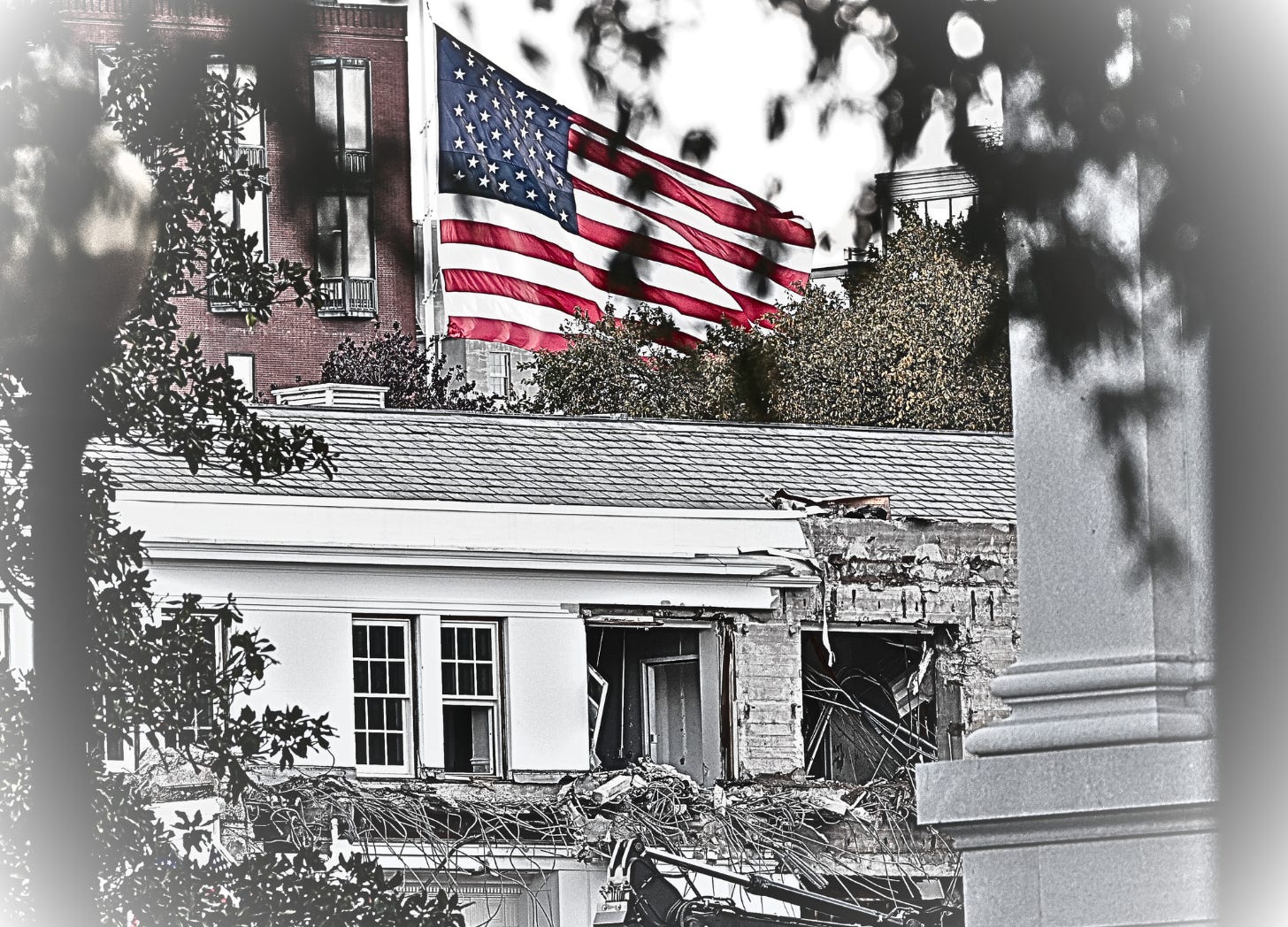
The first images of the long arm of an excavator raking large chunks off the White House East Wing facade surfaced one year ago today. They showed a portion of the building’s clean, white exterior scraped off and twisted roof shingles exposing the underlayer of its now weakened structural integrity. Entirely untouched, for the moment, was a second-floor window that appeared left gaping open.
Penny Adams, far removed from Washington, D.C., and disturbed by the midday reports, remembers staring at the darkened void filling the casement until it sank in:
“Oh my God, that’s my office,” she recounts.
That’s the memory seared in her mind about that fateful day—October 20, 2025—when crews, over several days, razed the East Wing, the secure bunker beneath it, the East Colonnade and the Jacqueline Kennedy Garden to make way for a massive and a more modern East Wing with a 22,000-square-foot ballroom that President Trump envisioned.
Adams never expected her final remembrance of her historic workplace would be its demolition. In a recent interview with East Wing Magazine, Adams, all these months later and with a tone of resignation, says: “It makes me want to cry even talking about it.”
‘The cutest little office’
On a late October day in 1969, Penny Adams walked through the Grand Foyer of the White House and saw a Halloween party in full swing. There, dressed in costumes, she spotted Julie and Tricia, the daughters of President Richard Nixon and First Lady Pat Nixon. All around there were other children also taking part in the festive atmosphere in the seasonally decorated space.
Adams, though, was there on more serious business—an interview with Connie Stuart, Pat Nixon’s staff director and press secretary. It was the first time she entered the White House and was somewhat in disbelief that she landed this opportunity. “I was just absolutely overwhelmed,” she says.
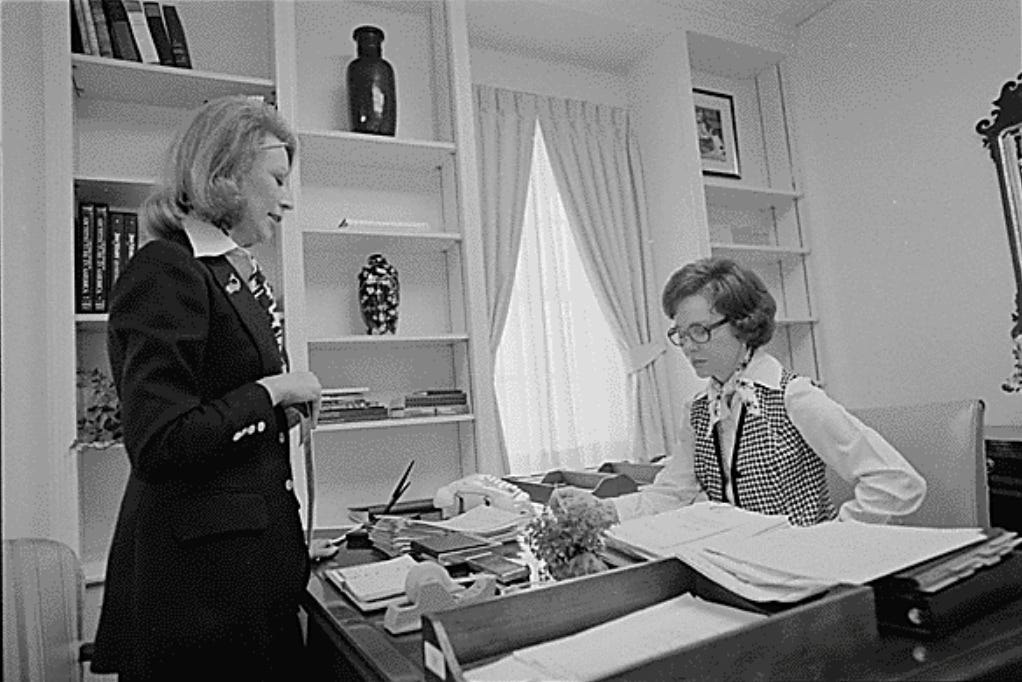
Within two weeks, Adams was offered the job of radio and television coordinator under Stuart, who was in the midst of restaffing positions in the East Wing. Not long thereafter, Adams was given her own office and would go on to work in the East Wing for four years in her position that eventually elevated to press secretary.
“I had the cutest little office,” she recalls.
In it, she remembers how the second-floor window looked out over East Executive Avenue at the Treasury Department building. She was allowed to decorate it any way she saw fit. Aside from her desk, she remembers a little settee, for which she selected the upholstery; a small glass-top table; and a couple of chairs. On the walls she hung framed, signed publicity photos of celebrities she encountered over the years as she also worked with entertainers at the White House.
She vividly remembers the first time the landline phone rang at her desk.
“I picked it up and I said it was Mrs. Nixon’s office,” says Adams, recalling a man barking on the other end of the line.
“‘Where is Helen? Where the hell is she?’” she recalls the West Wing staffer saying. “And I’m like, ‘What?’”
She fumbled over her words, aghast at the man’s harsh utterances. She didn’t have a clue where Helen McCain Smith, another staffer or “East Winger,” was at the time. Assuring she would try to find her, Adams hung up the phone and thought, “Good Lord, is this how it’s going to be?”
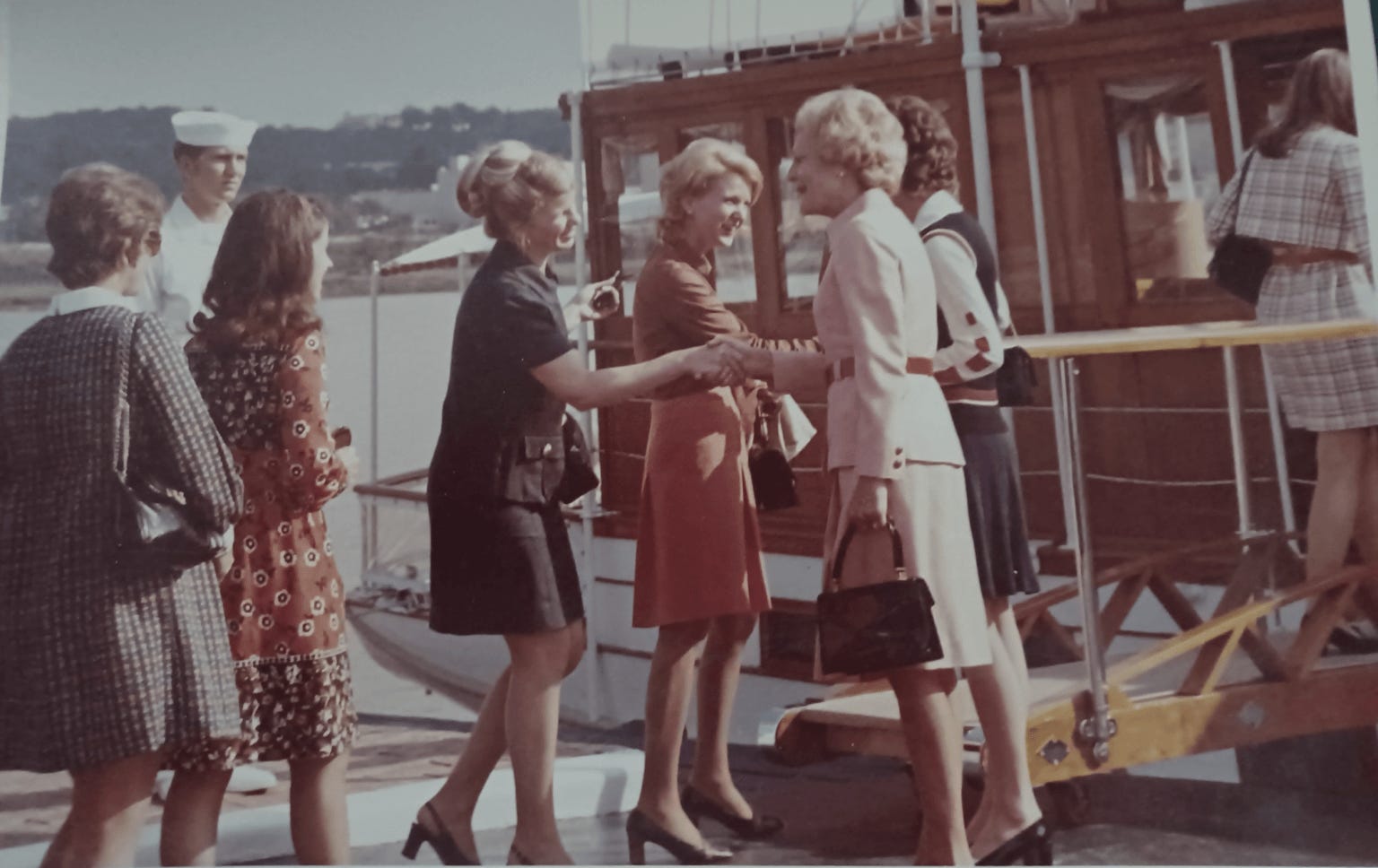
Thankfully, it never happened again. But the four years she spent working in the East Wing left her with the kind of experiences one witnessing and crafting behind-the-scenes history would have. Her first assignment, she recalls, was to take care of the American comedian and actor Bob Hope, who came to the White House with a group of singers, dancers, and comedians for a performance before traveling with his cast to entertain troops in Vietnam for Christmas.
“Right off the bat, I’m in charge of Bob Hope. Like, Oh my God!” Adams says. “But you just do what you have to do.”
Turns out, her memory of the endeared entertainer tarnished when the glitz and fame faded to flashes of anger he aimed at her upon his arrival. He was frustrated because his makeup artist hadn’t arrived right away, possibly slowed down at the gates of White House, she recalls. The incident, to this day, left Adams wondering if maybe that was her fault.
“I don’t know,” she says. “He got over it and they put on a great show in the East Room.”
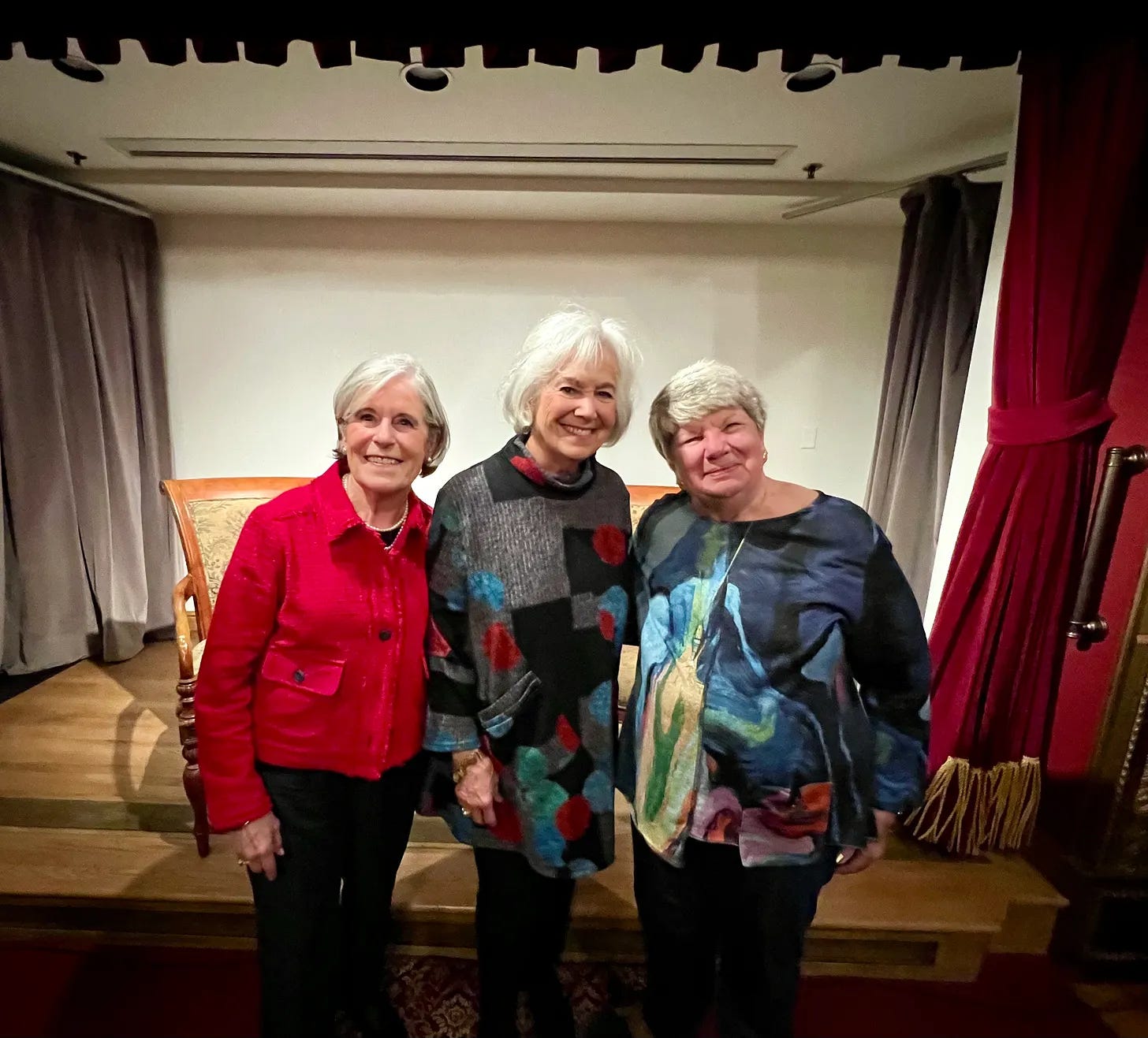
That same year, Debby Sloan started as an assistant to the social secretary working under Lucy Winchester. She would go on to work in that position until 1972 when she left to have a baby. She describes being “starstruck” about working in the East Wing even though she didn’t make it to her first day on the job due to a stomach virus. Situated away from the press offices, the social staff handled things like official White House invitations. “I remember just thinking, I’m living in a dream,” she says.
Her first big event was the State Funeral for former President Dwight D. Eisenhower. Among the events, the President and Mrs. Nixon hosted a diplomatic reception at the White House for visiting leaders including Charles de Gaulle, the president of France, and Pierre Trudeau, the prime minister of Canada.
“Oh my gosh, these are people I’ve read about in my history books,” Sloan recalls thinking at the time.
There were other unforgettable historic moments, too, that Adams and Sloan helped facilitate from the East Wing, including when Prince Charles and Princess Anne came for a visit.
But inside the building that was originally built in 1902 during the Theodore Roosevelt administration and remodeled with a second floor in the 1940s under President Franklin D. Roosevelt, the atmosphere of the women working in the East Wing during the Nixon era was described as “congenial” and “welcoming.”
That expectation was passed down by First Lady Pat Nixon, herself, who during that time period did not work from the East Wing. Instead, she worked from the White House second-floor Residence. Mrs. Nixon was very clear, Sloan recalls, the White House was never to be called the “Mansion.” It was the “People’s House.”
“She wanted everyone, every American, to feel welcome there. She wanted us to be kind to everyone and she exemplified that,” Sloan says.
Outside of their day-to-day work, Adams and Sloan were mostly shielded from the higher up warring East Wing vs. West Wing staff encounters. Instead, the East Wing office environment in their minds was cherished. The staff was driven to help get the word out about the hard work of their first lady, which included extensive humanitarian travel, White House preservation and public advocacy. Both Adams and Sloan left before the Watergate scandal prompted President Nixon’s resignation on August 8, 1974.
“If I had to give you one word, I would say ‘joy’,” Adams says about her time in the East Wing. “We all had a mission. We were all thankful to be there. We realized how fortunate we were to be in that place at that time working for the first lady who we all adored.”
A professionalized East Wing
The first time Anita McBride entered the White House East Wing she remembers lit candles in all the East Wing windows. It was during the 1981 Christmas holidays. She was a student attending American University and it was President Ronald Reagan’s first year in office. She was invited to a reception by a friend who worked there.
She distinctly remembers walking up the driveway of East Executive Avenue when access to the White House was less closed off. She entered through the East Wing and when she stepped on to the State Floor of the White House, there was the most elaborate display of flocked Christmas trees she had ever seen. “It was stunning,” she recalls.
It would be the first and last memory McBride had seeing the White House East Wing and the Residence through an uninitiated lens. Not long thereafter, McBride was hired by the Reagan administration and worked in White House correspondence review. She eventually rose to the position of White House personnel director, a role she remained in through the George H.W. Bush administration. When George W. Bush was elected in 2000, McBride served as assistant to the president for White House Management and eventually chief of staff to First Lady Laura Bush from 2005 to 2009.
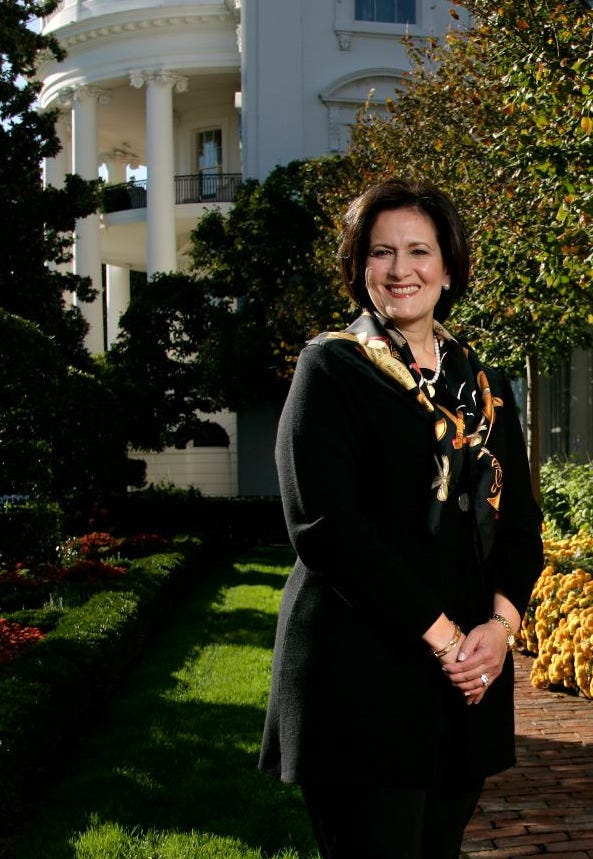
Her memories from both White House wings stand in stark contrast.
“It was such a different feel from being in the West Wing, which is a lot of frenetic activity,” McBride says. Part of that, McBride explains, was because public White House tours ended by 1 p.m. and then it was quiet unless there was an event scheduled.
“The East Wing was always calm and serene. That was the sense I had of it,” she adds. “It was beautiful. The sun was always pouring through the windows.”
By the time Laura Bush stepped into the role of first lady, the White House East Wing operations had expanded significantly since the days Penny Adams and Debby Sloan worked there. The administration was slow to start because of the delayed outcome of the 2000 election results that were tied up for weeks in recounts and legal battles. Just a few months later, operations were complicated by the September 11, 2001 terrorist attacks.
Mrs. Bush set up her primary office in the East Wing after her predecessor First Lady Hillary Clinton, for a time, worked out of an office in the West Wing. By the end of President Bush’s second term, Mrs. Bush had an East Wing staff between 24 and 26 people. Among the signature accomplishments by the first lady and the East Wing during the second term, was a secret trip requested by Mrs. Bush and facilitated by McBride to Kabul, Afghanistan, in the midst of the U.S.-led war against the Taliban to support the rights of Afghan women.
And it was the first lady’s office that McBride remembers as a gathering place for staff meetings, birthday celebrations and meetings with outside visitors. The space was the only area large enough for the staff to gather around a conference table.
“People loved coming there, loved being invited to a meeting there,” McBride says.
At the same time, she recalls space in the East Wing began to feel tight, adding, “It was not conducive for when you had big events and had to bring in a lot of people to work there.”
Traditional White House events had grown with volunteers descending on the White House to help decorate it for Christmas and Easter. Storage space for things like gift bags was hard to come by.
“All of us loved working in the East Wing. It was wonderful. But, we knew the limitations and we knew the difficulties of space that was really chopped up,” McBride says.
Gone
On October 23, 2025, wrecking crews finished off what was left of the White House East Wing. Dramatic images showed a crude opening into a stunted East Wing corridor precariously close to the Residence and aerial photos of the ground gouged and heaped with rubble.
Azadeh Moaveni, like the rest of the nation, was astonished.
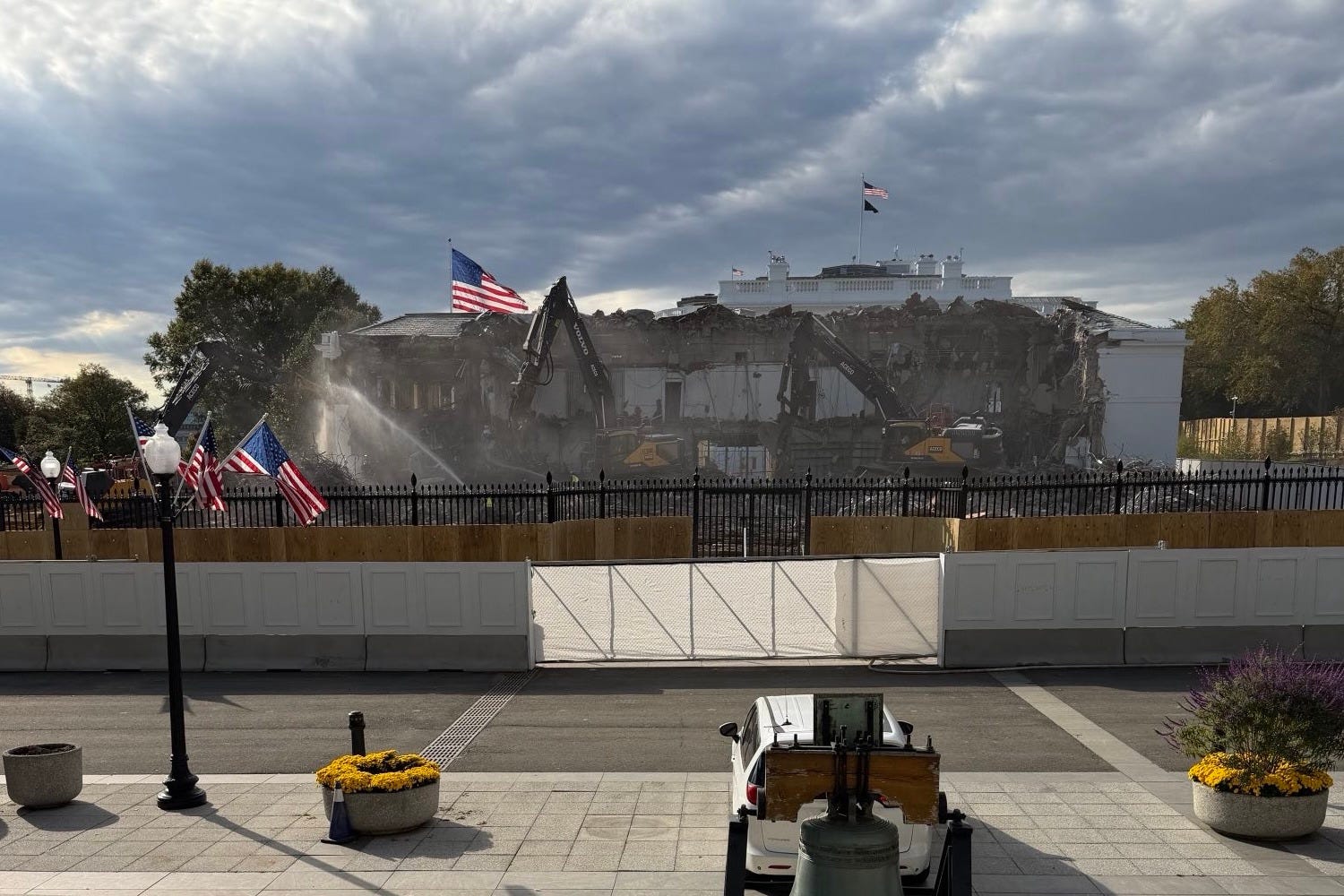
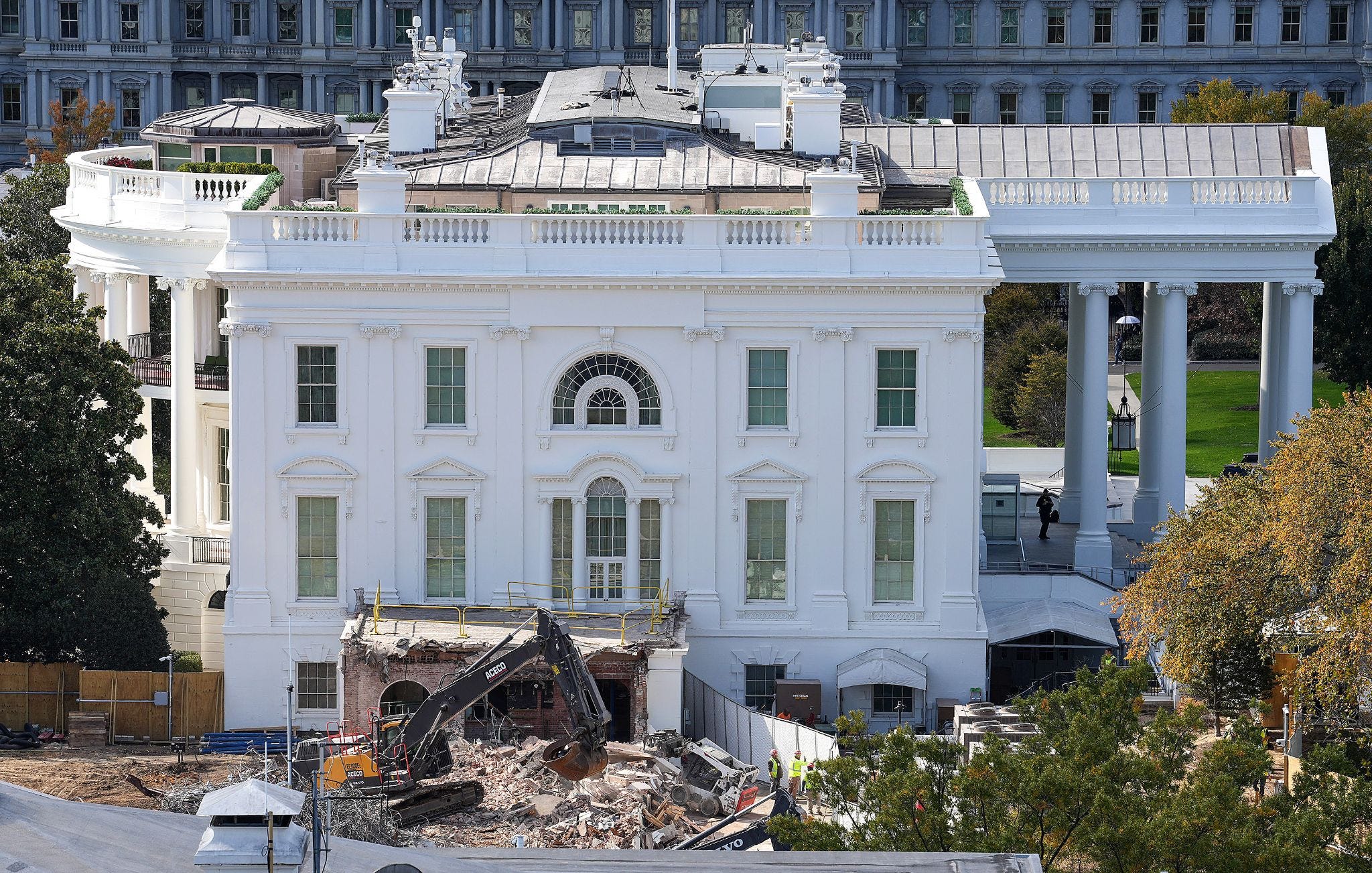
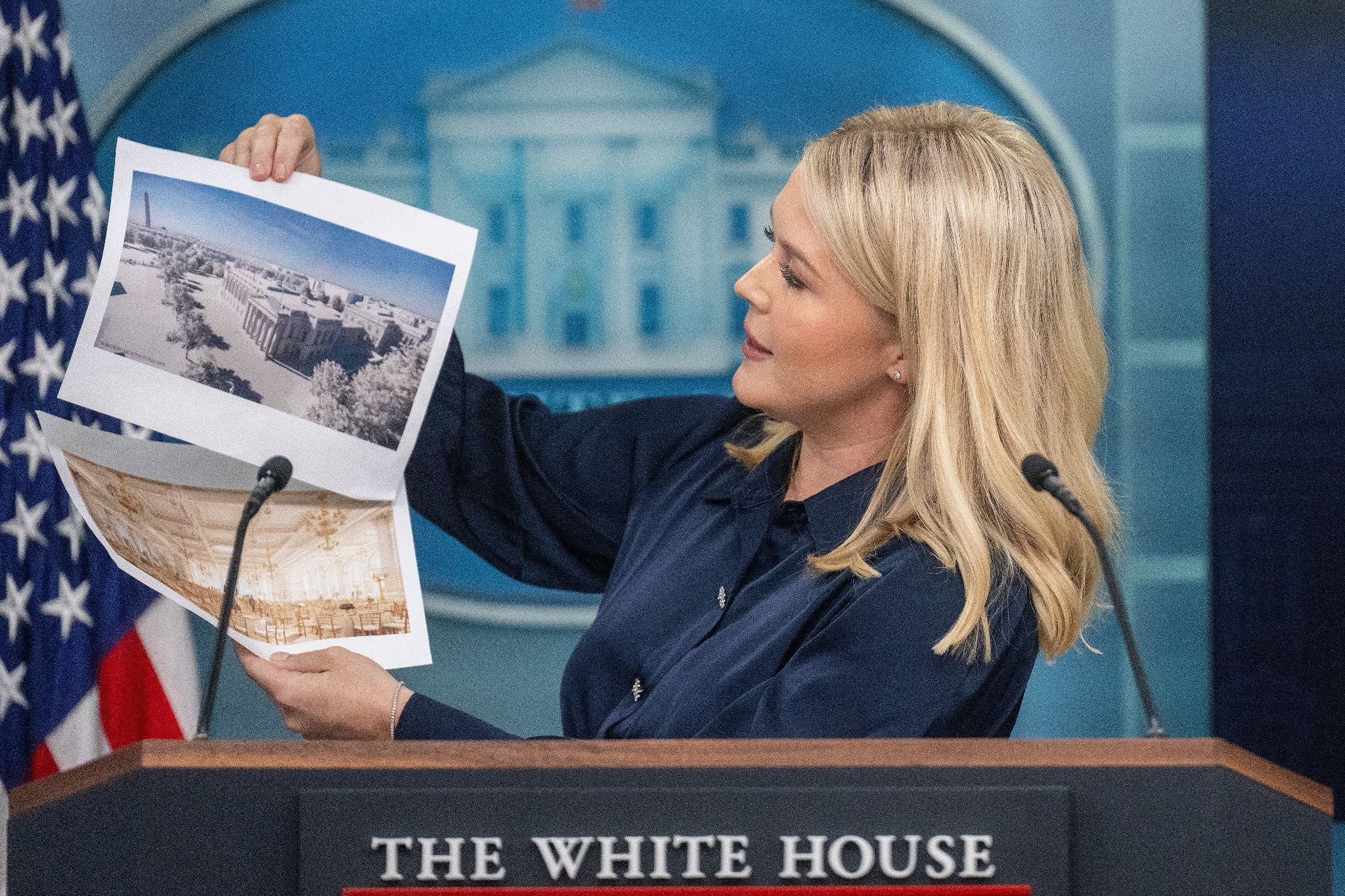
That summer there had been rumblings from President Trump of a proposed ballroom and even a press briefing with then-White House Press Secretary Karoline Leavitt holding up renderings of what he envisioned. It was somewhat confusing about how such a proposal would move forward or if it would even happen. There was no warning that the East Wing would be torn down aside from suspicions about trees on the east side of the complex that were reportedly removed ahead of the unannounced demolition.
Moaveni, a journalist and author specializing in gender and women’s quest for political leadership, had been working for more than a year on the soon-to-be released book The East Wing: Power, Intrigue, and the Untold Story of America’s First Ladies. Its demolition had a compounded effect on her.
Apart from being shocked and devastated that it was destroyed, she had not yet visited the East Wing. “I had never imagined for a single second that it could be vulnerable or potentially lost,” says Moaveni, an associate professor of journalism at New York University, where she directs the Global Journalism program.
In her research, she prioritized interviews with elder East Wing staffers, believing she could eventually tour the White House. The demolition, as a result, put her book on a faster track for publication.
Particularly troubling about the demolition, Moaveni says, was the violent end of what was considered a site of women’s history. Specifically, she notes, it was a site that represented women’s work in Washington and in the White House as well as it being a conduit for women gaining power through working for the first lady—all of which contributed to transforming the presidency.
“The way it was demolished without any announcement or public consultation seemed to signal a disregard for the struggle for equality that was at the heart of what that site was at this moment in our culture,” she says.
At the start of the second Trump administration, the president named, for the first time, a female White House chief of staff in Susie Wiles who was previously one of his campaign managers. The destruction of the East Wing occurred at a time when a woman had successfully pushed themselves into the very inner sanctum of power, Moaveni says, adding “but doing something that perhaps disregarded or undervalued the journey that many women had taken in order for that possibility to become a reality.”
That journey began with First Lady Melania Trump’s predecessors, but particularly Rosalynn Carter who in 1977 carved out a physical workspace for herself and future first ladies in the East Wing during a second women’s rights wave. The Equal Rights Amendment was in play and Mrs. Carter pushed through legislation that created a budget and a framework for hiring staff in the Office of the First Lady. Moaveni in her forthcoming book identifies Eleanor Roosevelt as the chief “architect” of the office.
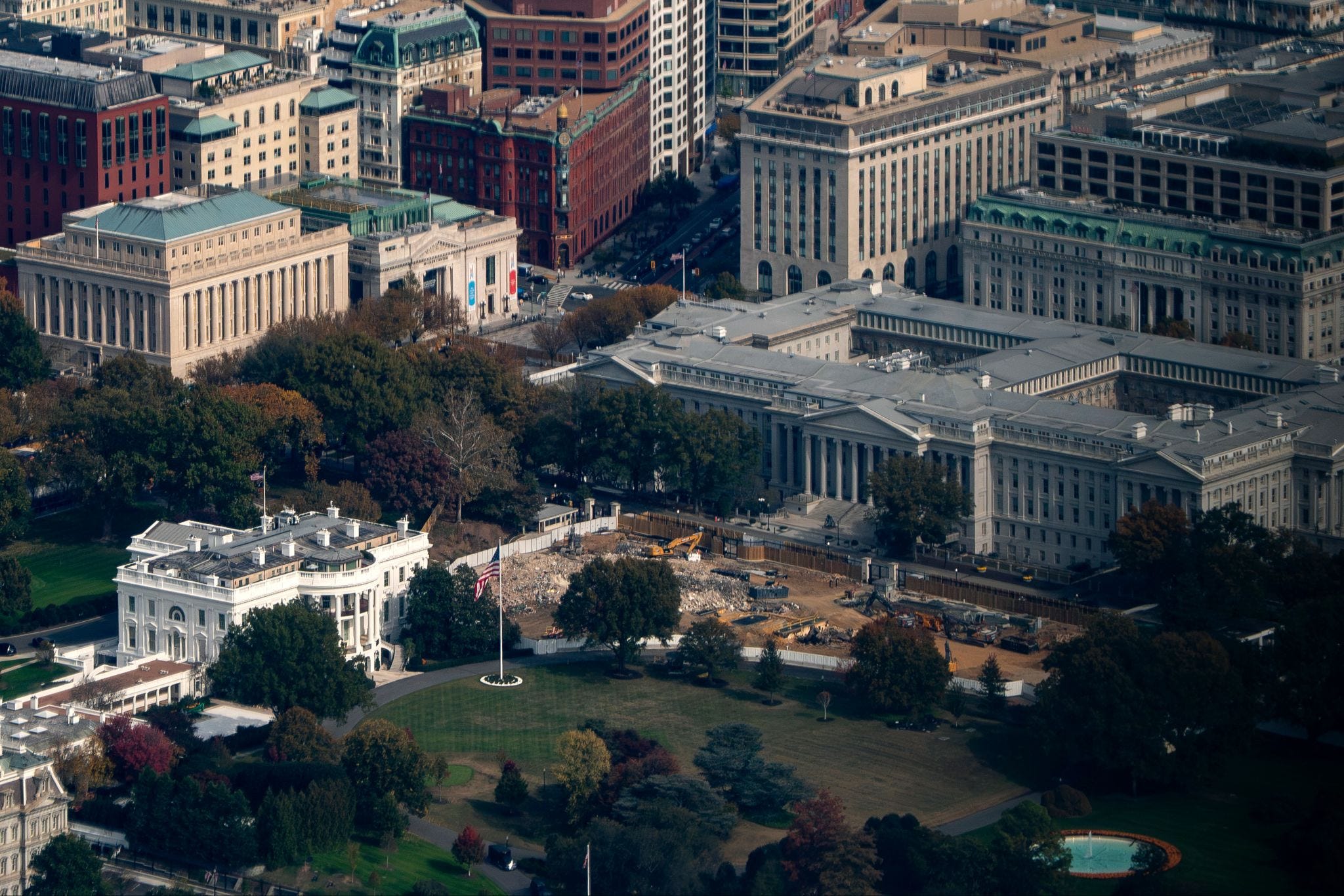
The demolition triggered a reverberating public pain. For many, the ruin metaphorically represented an open wound.
Former First Lady Dr. Jill Biden, the last first lady to fully occupy the East Wing office writes in her memoir View from the East Wing, “I felt a sense of loss and grief with every blow from the wrecking ball. The innards of the East Wing were spread out for everyone to see, like a rare and precious animal that had been hunted down and killed.”
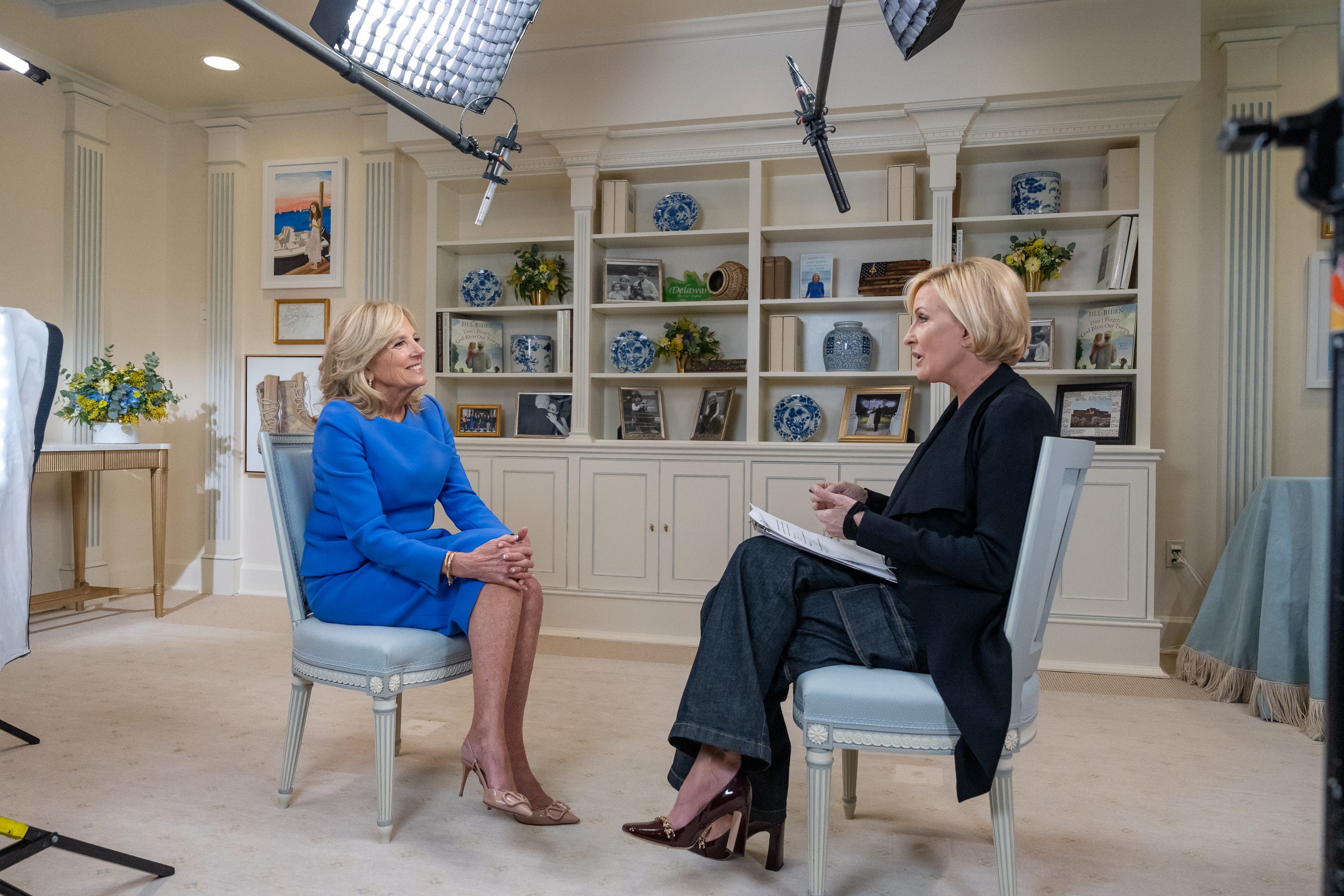
People were responding to the cultural loss by projecting onto the demolition the state of their anxiety and concern about where “women are fitting into this very divided national moment,” Moaveni says.
The mostly silent Mrs. Trump, who distanced herself and reportedly called the demolition her husband’s project, enraged many. Moaveni, on the other hand, considers Mrs. Trump very astute.
“My interpretation would be that simply refusing to back it or put a sheen on it or to in any way lend her credibility to it is actually quite striking,” Moaveni says. “Maybe that’s her stealth dissent.”
Debby Sloan and Penny Adams tried to no avail to get out ahead of the plans for a new ballroom when in the summer of 2025 they contacted and sent letters to the National Capital Planning Commission in Washington, D.C., in opposition of the project.
“It never occurred to me that they would start demolishing the East Wing without permission from anybody,” Sloan says.
Permission, it turns out, was not required for the demolition, according to the White House. Hearings were held with an overwhelming majority of the public speaking out against the project that did not stop the Trump-appointed commissions from advancing the ballroom. The legal battles were quick to follow, but in the end preservationists lost when the Supreme Court did not stop the administration from constructing what later evolved into a five-story, subterranean military complex—complete with a hospital—and on top a ballroom with costs ballooning from $200 million to $400 million. Early on, the president announced that the project would be paid for completely by donors and later pivoted to saying taxpayers would pay for it, too.
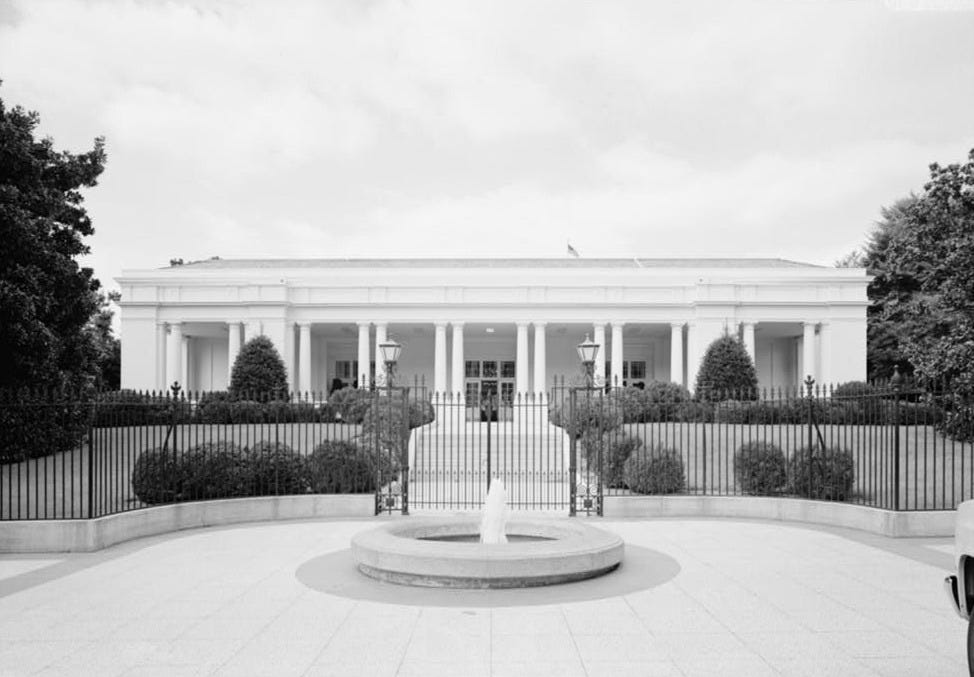
An indestructible East Wing
Plans presented for the new East Wing earlier this year showed a new Office of the First Lady suite. It would be located on the ground level underneath the ballroom and adjacent to a new large commercial kitchen.
The former working hub of the first lady was its own building with her space on the top floor. Other areas in the old building housed the military aides, visitors and calligraphers offices. This new iteration, yet to be seen, is drawing mixed reactions.
“It sounds like the East Wing is being overlooked … like you’re a second-class citizen if you’re in those offices,” Sloan says. “It feels like you’re being squashed into the ground.”
Then, for a moment, she reminisces about the gardens that had existed off the Colonnade connecting the East Wing to the Residence. It was there sitting on a bench with her future husband, Hugh, who also worked in the West Wing, where the two got engaged all those years ago.
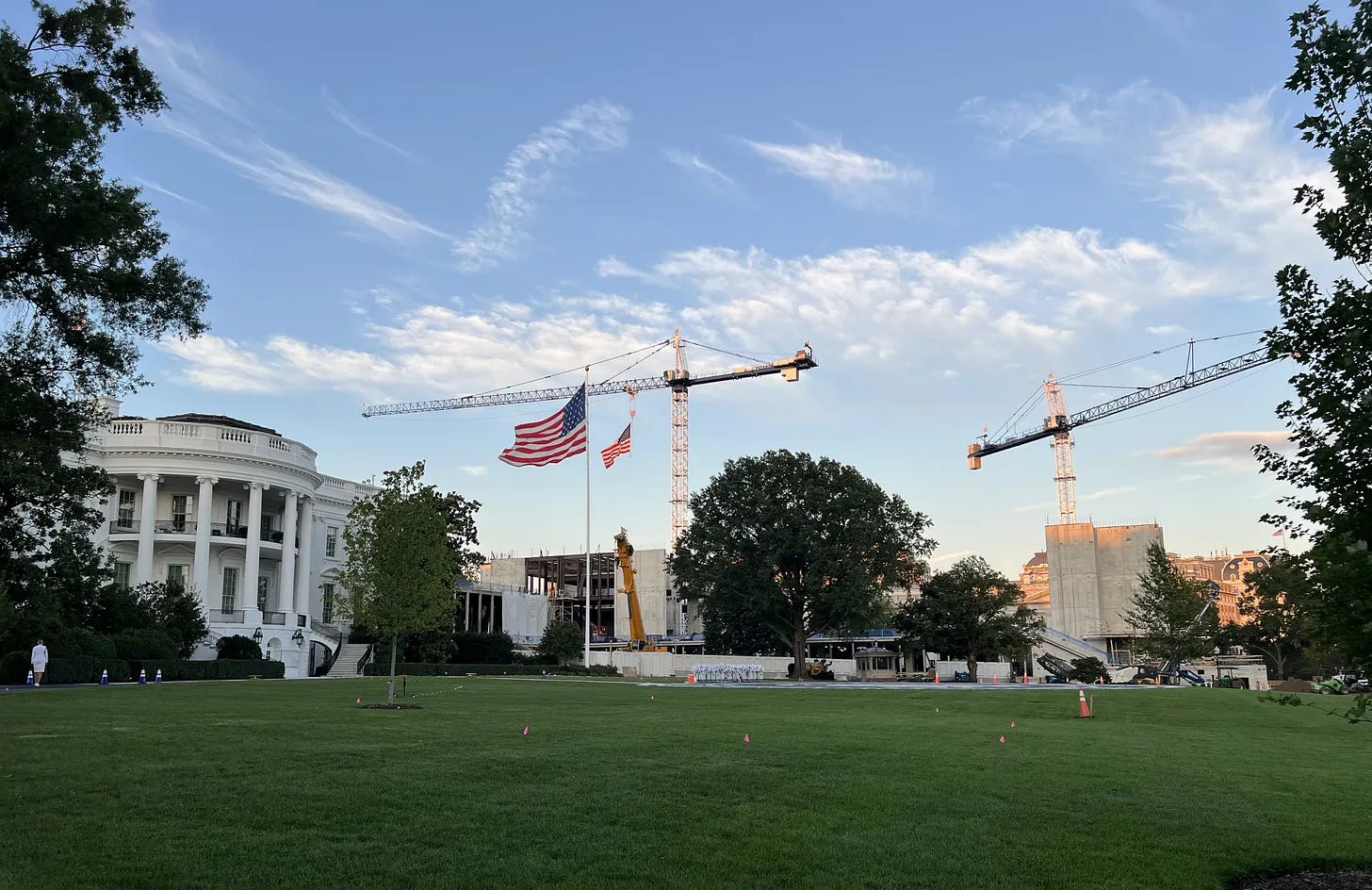
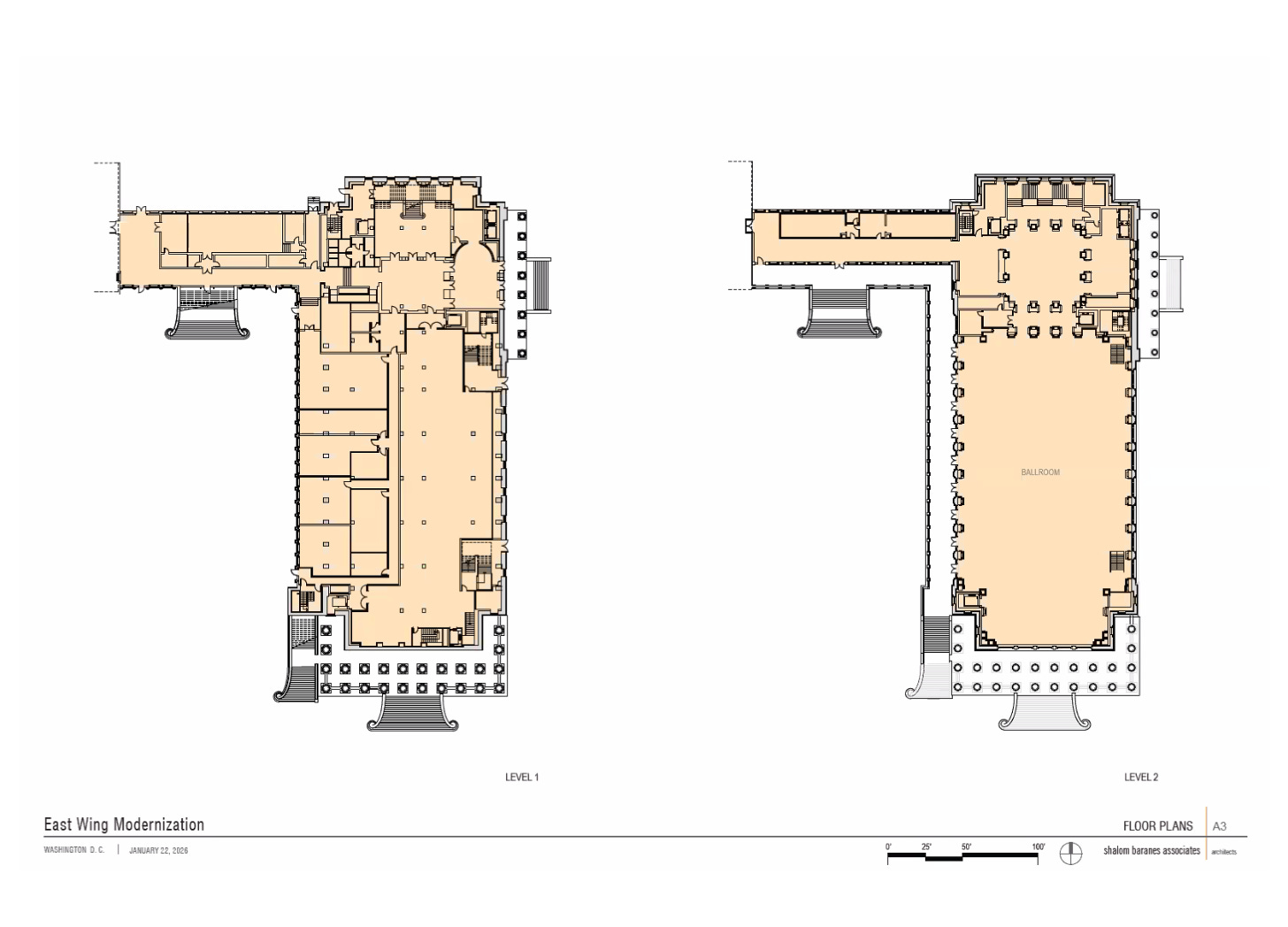
There is symbolism in considering the previous stand-alone building and the planned new location of the Office of the First Lady, Moaveni says. The East Wing offices will be a corner in a structure that is now going to be dominated by and associated with industrial-level entertainment, she adds. The ballroom is expected to hold 1,000 people.
“It can no longer be the heart of the first lady’s domain anymore,” she says. “It just dwarfs it. It is the space of the industrial ballroom.”
Those feelings are also entwined with optimism about the site.
A year later, Anita McBride, who also serves as the director of the First Ladies Initiative at American University, is hopeful about the new East Wing.
“I’m a realist. I’m resigned to it. It’s happening,” she says.
The history of the White House is one of tumultuous change, she adds, noting how this change was startling and stark at the time it happened.
“But being realistic as someone who worked in those spaces, it needed changing. It needed upgrading. It needed to be expanded,” McBride says. “My hope is that it is a beautiful new space worthy of an important office and sets of offices that are not only doing the internal work for the first lady and her projects, but also is the place to which the public enters and sees their White House.”
In her book out later this year, Moaveni traces a legacy of the East Wing that is indestructible. It’s a legacy of women and their achievements that parallel women’s history.
If the past is truly prologue, the evolving Office of the First Lady can take the lessons of its predecessors and with it shape the next.
Updated October 20, 2026