


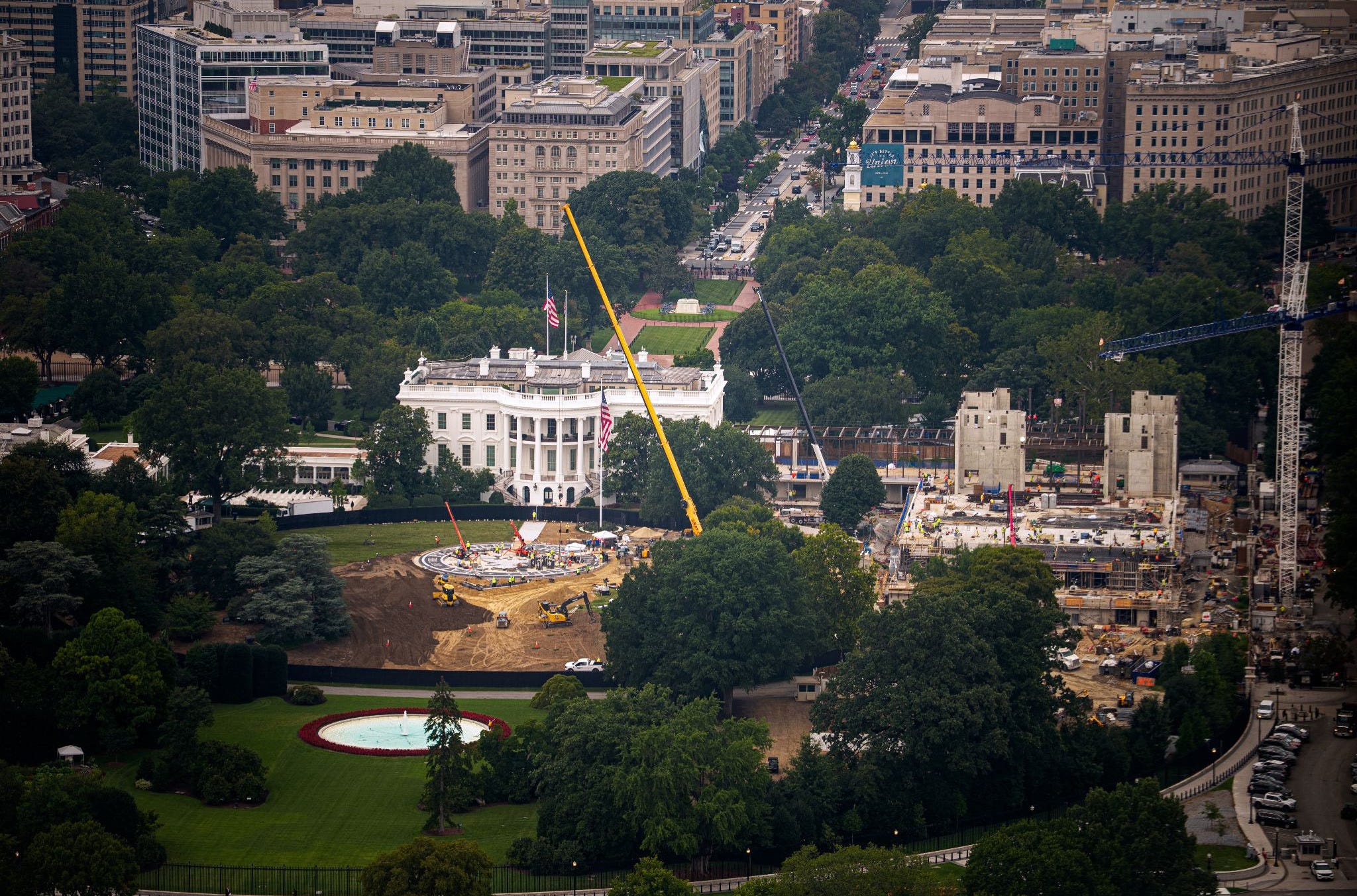
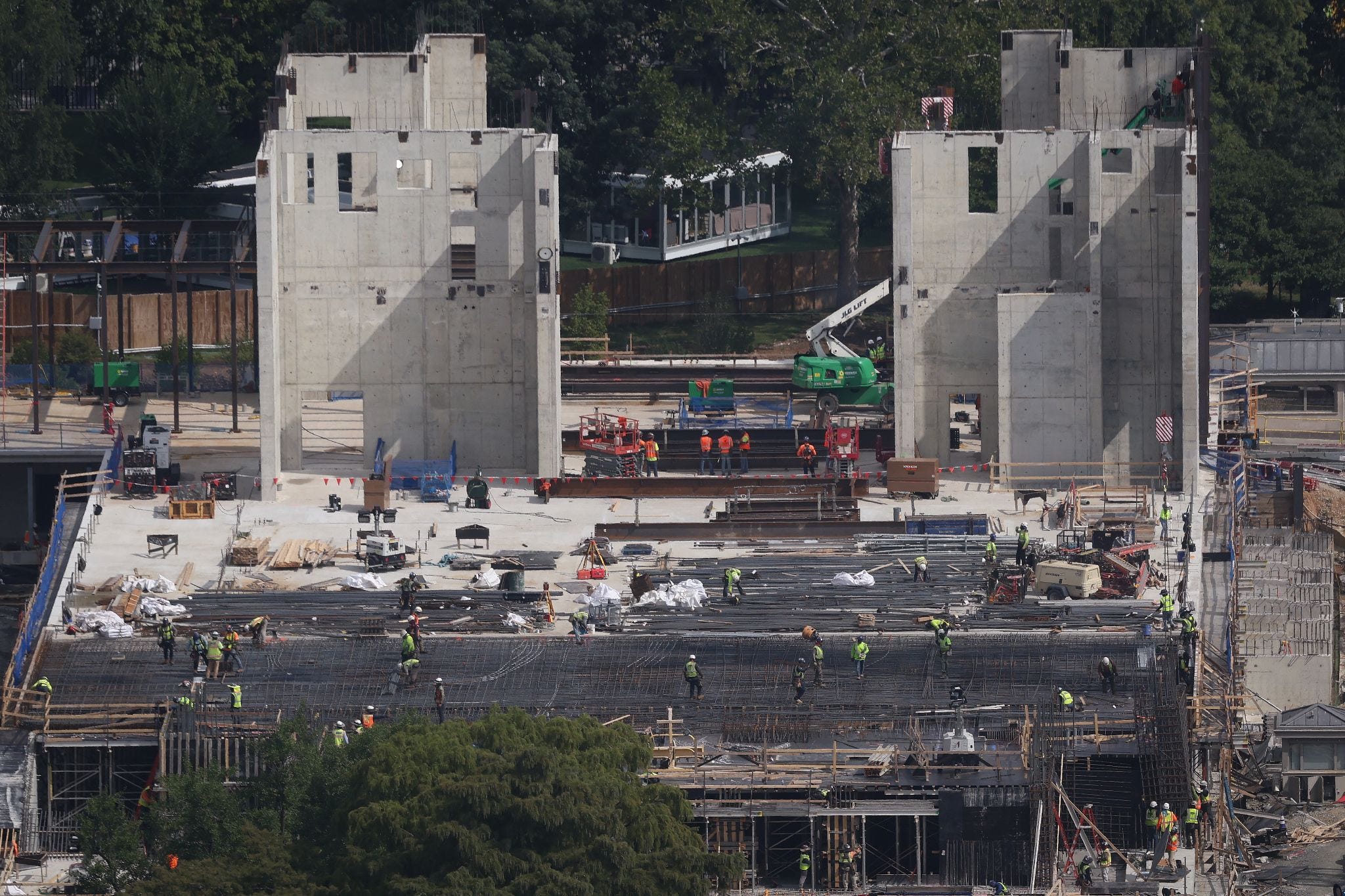
The Supreme Court on Friday permitted construction to continue on the $400 million White House ballroom, an action that will allow time for the justices to consider a lower court’s ruling that the construction was unlawful.
Chief Justice John Roberts blocked the order from United States District Judge Richard J. Leon (a George W. Bush-appointed judge) in March that would have gone into effect Friday requiring construction to stop without explicit approval from Congress. In his ruling, Leon allowed underground construction to continue while the Trump administration appealed the decision.
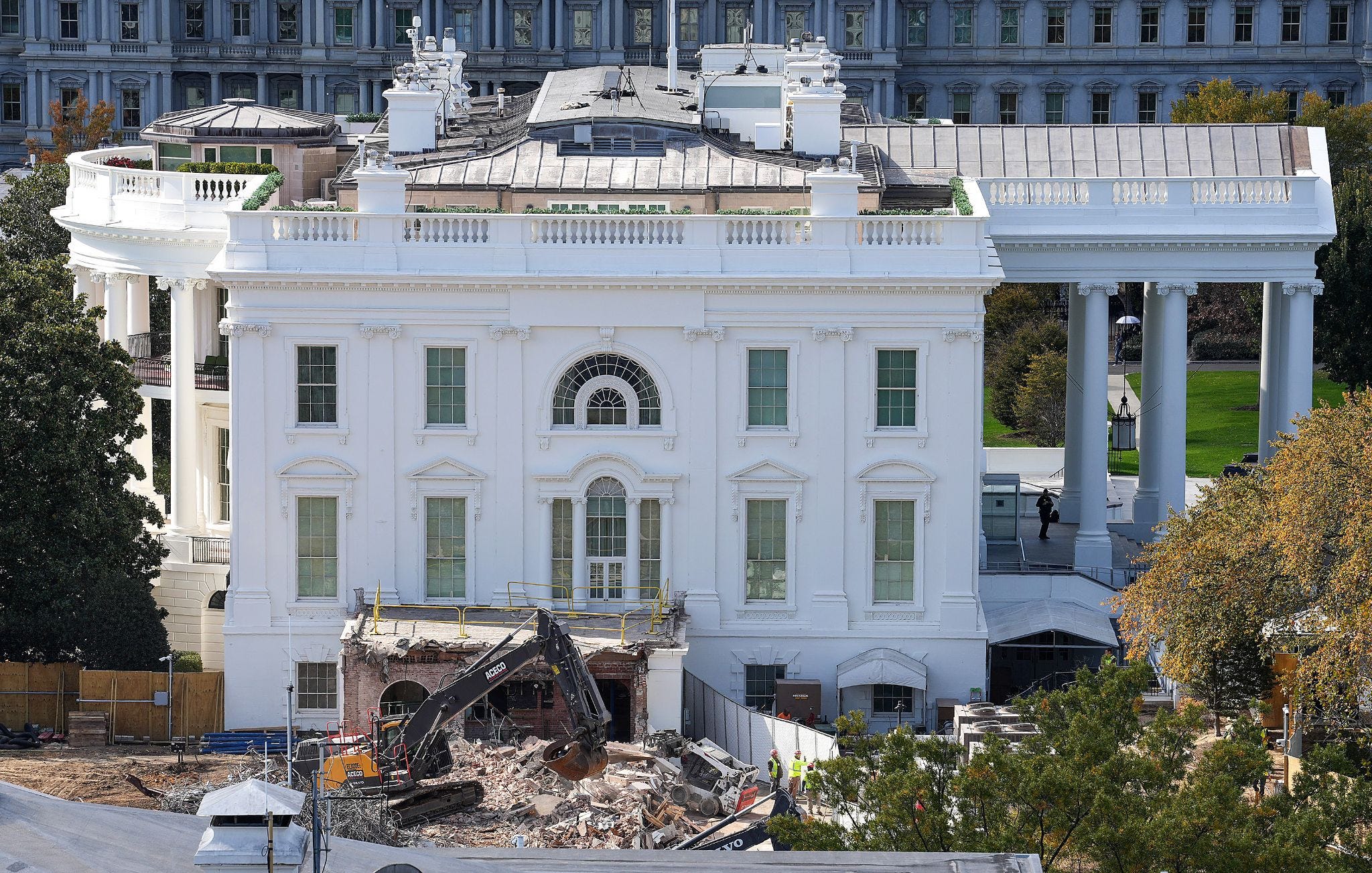
The news came as another disappointment to a Michigan woman who worked for First Lady Pat Nixon in the East Wing, which was demolished by President Trump beginning on October 20, 2025. Debby Sloan, assistant to the social secretary during the Nixon administration, has been closely following the ballroom saga since her former workplace was bulldozed. Early on, she rallied other former Pat Nixon East Wing staffers to raise their voices against the ballroom plans.
“These are historic sites. These are things that belong to the American people, not to one particular president who’s a tenant at the White House,” Sloan told East Wing Magazine in a phone interview Friday. “And it’s devastating to me that he is destroying our history and making it over to his taste.”
A flurry of court filings this week revealed how the motivation for President Trump’s ballroom had shifted from when his plans were first announced about a year ago.

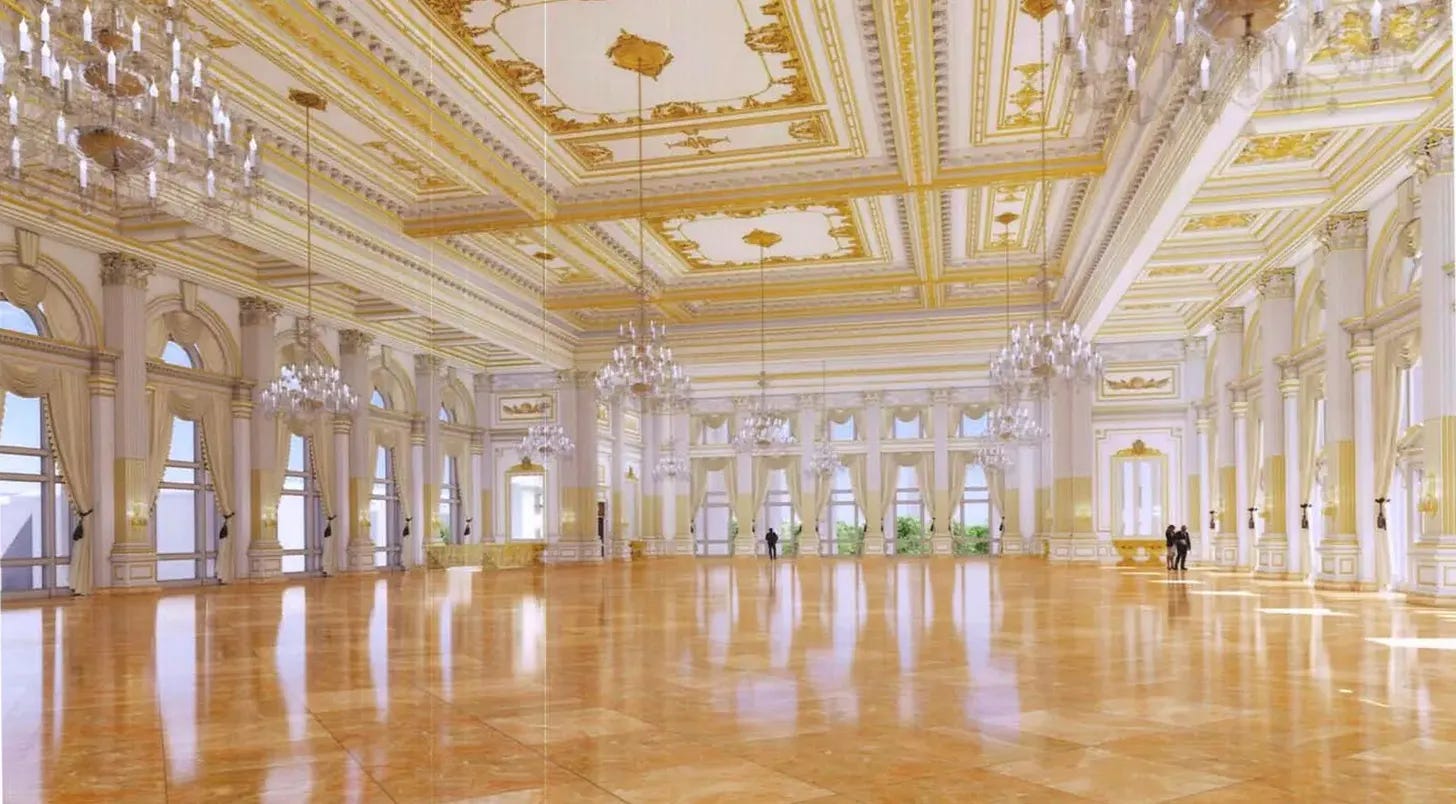
Initially, the president’s motivation for a new White House ballroom was tethered to creating a larger space for state dinners, ceremonial events and welcoming foreign dignitaries. Early on, the administration criticized past administrations for erecting unsightly tents on the White House lawn and asserted a White House ballroom would create an elevated gathering space suitable for the office of president of the United States.
Sloan was spurred to action when she saw the initial proposal and renderings depicting a massive ballroom. It was something, she said, was unnecessary and that the proposed scale would defeat the purpose of visitors having an intimate audience with the president.
“I was very shocked that [President Trump] felt that this kind of thing was needed,” she said. “When the Nixons were in the White House, they had a state dinner almost every month the first year. I think the only time they were outside was when they entertained Prince Charles or Princess Anne when they came to visit, and it was a beautiful summer evening.”
Just recently, though, the administration has shifted its rationale for a ballroom to national-security concerns and continuity of governing, citing the multiple assassination attempts on President Trump.
The 90,000-square-foot project, dubbed the East Wing Modernization, now recasts the ballroom as a secure military complex. It extends five stories below ground and could withstand nuclear blasts, the administration said in a filing earlier this week. The ballroom, the president asserts, is the protective layer topping off the bunker below because it will be built with “hardened concrete, steel, and rebar; protective missile-resistant columns, roofs, and beams; drone-proof ceilings and roofs; and bullet, ballistic, and blast-proof glass.”
In other court filings, preservationists and members of Congress argued that the administration’s actions were unlawful because it skirted Congress in the approval process.
A jointly-signed court filing by 33 members of Congress submitted on Tuesday argued to the Supreme Court that the Constitution grants it ultimate control over all federal properties including the White House. It notes that it was Congress that authorized its construction and appropriated funds to do so at its earliest establishment and for more than two centuries since, the Residence has been renovated and maintained with its approvals and appropriations.
“Congress neither authorized the demolition of the White House’s East Wing and construction of a ballroom nor appropriated funds to carry out that project,” lawmakers said in the filing.
Members of Congress in the filing contended established law lets Congress fund only maintenance and upkeep on the White House’s existing foundational structure and infrastructure with funding specifically for the “care, maintenance, repair, alteration, refurnishing, improvement, air-conditioning, heating, and lighting including electric power and fixtures).”
And even if the Trump administration’s East Wing Modernization project was covered under the law, members of Congress said in the filing that there is an additional problem for the president: “Congress never appropriated funds to carry it out.”
Inside, the bunker allows for bomb shelters, state-of-the-art hospital and medical facilities, protective partitioning between all areas of the building, top secret military structures and equipment, military-grade venting, a single integrated air conditioning and heating system, sniper nests, and a drone port on top, elevated by the structure of the ballroom, to protect the White House and surrounding region from aerial attacks, the filing said.
Lawmakers in their court filing argue there is no national-security “carveout” to Congress’s control over federal property and federal spending.
“If the President believes national-security concerns require the project, there is a solution: he can bring those concerns to Congress and convince Congress to authorize the project and appropriate the requisite funds,” they said in the filing.
The National Trust for Historic Preservation, the plaintiff and nonprofit organization chartered by Congress that maintains, enhances and protects historic places, sued President Trump and other agencies of the government on December 12, 2025, just weeks after the president demolished the East Wing.
In a filing earlier this week, the preservationists argued that the president does not have “unilateral legal authority—constitutional, statutory, or otherwise—to build a massive ballroom on the site of the now-demolished East Wing.”
Two lower courts have affirmed that stance and have stated that for the above-ground portion of the ballroom project to continue, it must have explicit approval by Congress.
Preservationists pointed out the brazen assertion by the administration that construction of the site, which is now clearly above ground, would continue and that it could not be stopped because of the nature of the indestructible material being used to build it.
“That striking admission decides this application. Absent an injunction, Petitioners candidly contend that if the ballroom were ‘ordered to be taken down, or even altered, by the court, there would be no way to do so,’” preservationists said in the court filing. “That is the essence of irreparable harm.”
Preservationists also accused the administration of trying to outrun judicial review.
“When the district court first enjoined ballroom construction in March 2026, above-ground work had not even begun. It took the D.C. Circuit only four months to affirm the district court’s injunction—after highly expedited appellate proceedings during which the injunction was administratively stayed due largely to Petitioners’ assertions of emergency.”
The preservationists go on to say, while the D.C. Circuit deliberated, “the administration accelerated construction, with a 250-person crew ‘working 20 hours a day, 7 days a week,’ in an effort to put their illegal ballroom ‘beyond … judicial intervention’ for good.”
Indeed, the administration this week said, “the Project is 65% complete in its entirety, and moving quickly toward total completion.”
On Wednesday, the administration responded in an additional court filing describing how “completing the Project without delay is a national security ‘imperative’” and included top administration officials, such as Secretary of State Marco Rubio, attesting the project without delay was “absolutely critical.” It also argued that approval from Congress is not needed and that the National Trust is wrong on its stance and its member’s “subjective preference” of the White House complex’s aesthetic appearance.
But that appearance to Sloan matters. So much so, she submitted a letter to the National Capital Planning Commission (NCPC) months ago along with thousands of other American citizens that made up the vast majority of public input on the proposal voicing unfavorable opinions of the president’s plans. She listened online to the proceedings. And for a moment, she believed the tide might turn.
“I thought, ‘Oh, thank heavens,’ this has got to make people, even if they were appointed by Trump, stop and think about the American people and not just about the president,” she said. “I was very hopeful after that hearing.”
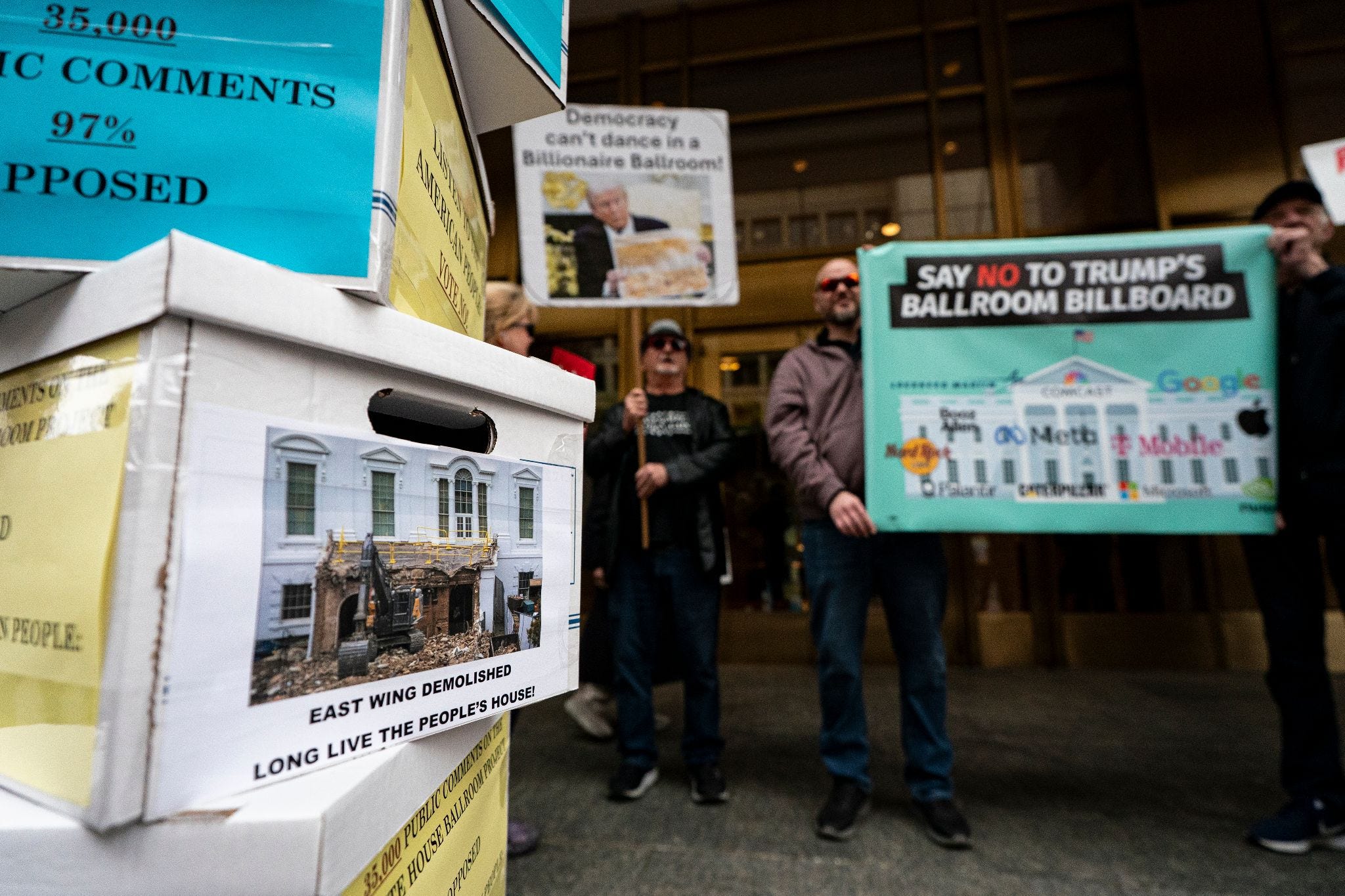
Despite the overwhelming negative response by the American public, that commission approved the president’s plans. And again, she said: “I was devastated. I thought, well, there’s no point. Anybody that he’s appointed is going to do whatever he wants.”
In the months since, Sloan has watched the ballroom rise above ground as the court battles ensued. Just a few hours after Justice Roberts’ decision to let the ballroom construction continue, Sloan expressed, again, how sad it made her. But, she refused to become cynical about the process.
“I always hold out hope that they will follow the rule of law,” she said. “I always hold out hope until the final decision is made.”