


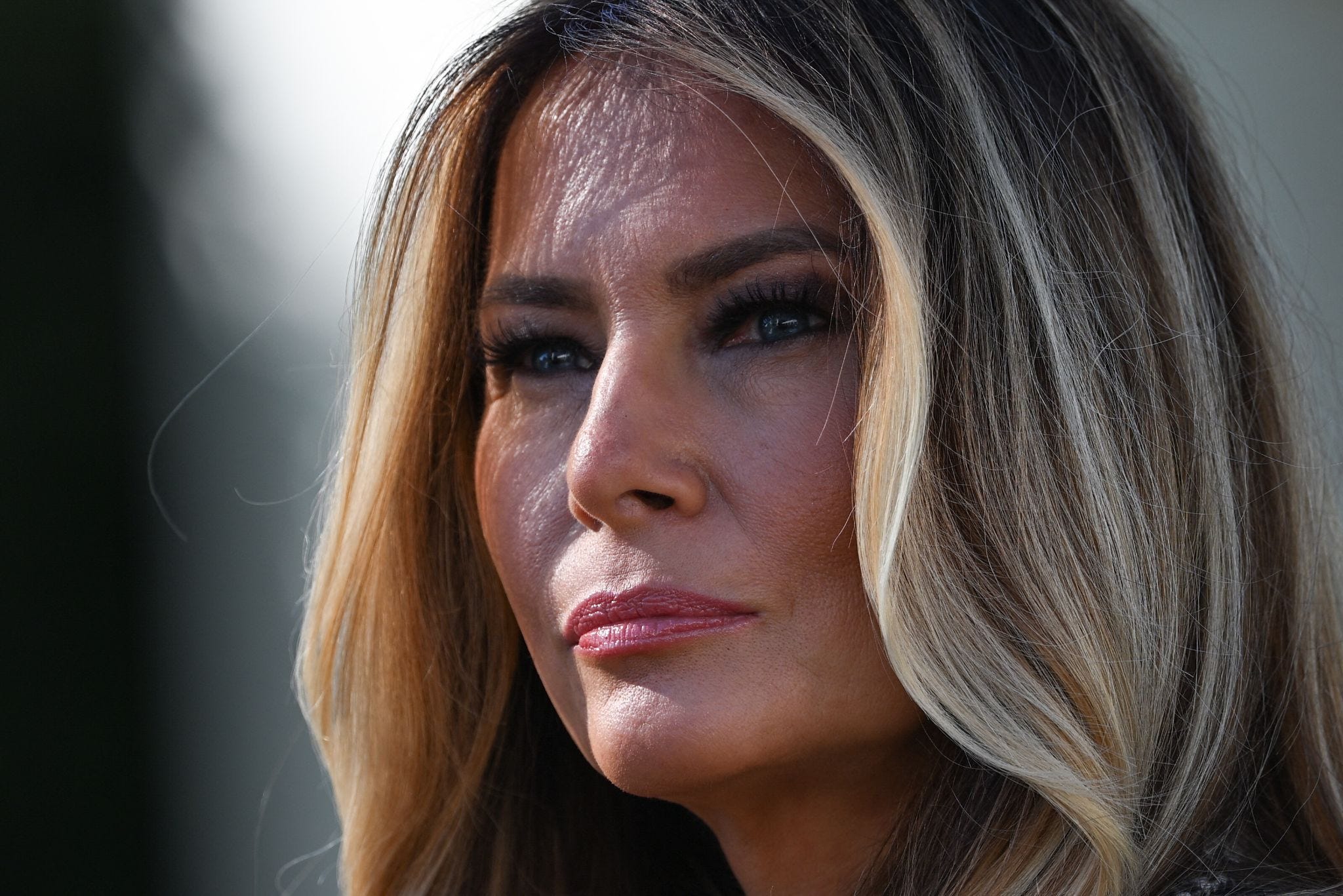
In the days since Melania Trump announced that she brokered a localized ceasefire in the Ukrainian city of Oleshky, she has taken to her social media giving the public intermittent updates on the humanitarian mission that has paused violence in one city in the Russian-led war against Ukraine.
“HUMANITARIAN LEADERS EN ROUTE TO OLESHKY,” she posted Thursday. And on Wednesday, “DEMINING BEGINS.” The messaging began on Tuesday when Mrs. Trump alerted the world that “THE CEASEFIRE HAS COMMENCED.”
Mrs. Trump confirmed on Tuesday that a planned six-day ceasefire between Ukraine and Russia has been sped up by two days in an effort to evacuate residents and deliver humanitarian aid. Reports of elderly people and young children in urgent need of medical attention, medicine, food and clean water prompted the first lady to step in as an intermediary, negotiating a ceasefire in Oleshky, the front-line city.
“Let’s remain united in support and wish them safety as they approach Oleshky,” Mrs. Trump said on Thursday of the humanitarian leaders en route to the city in her post. “May this humanitarian mission end the suffering and begin a new chapter of durable peace between Russia and Ukraine.”
The ceasefire brought something to locals in the Oleshky area that has deteriorated over the past several months—a dramatic sense of silence. Citizens in nearby Kherson told reporters on the ground on Wednesday that the ceasefire allowed some to take long outdoor walks, students to step away from online classrooms and others to gather with friends. Images from the area also showed Ukrainians outside repairing large swaths of netting used to defend against drone attacks.
In a New York Times report, it was unclear to civilians as to how Mrs. Trump secured the ceasefire. Her actions drew direct comparisons to her husband President Trump and confusion when one man said, “In the morning he’s our friend, in the evening he’s our enemy.”
When it came to the first lady, though, the man’s friend interjected saying, “We like Melania more!” And he added, “I thank her that people can at least evacuate.”
His friend agreed, calling Mrs. Trump “a beautiful woman with brains” and suggested “if a woman were in power in the U.S., it would be better.”
Indeed, the first lady’s ceasefire efforts are not simply significant, but “historically unprecedented,” said Thomas Balcerski, an associate professor of history at Eastern Connecticut State University and author of the chapter First Ladies in Wartime in the 2025 published book The Cambridge Companion to U.S. First Ladies, edited by Lisa M. Burns and Teri Finneman.
“While we still don’t have the full picture just yet of how the ceasefire was arranged, First Lady Melania Trump certainly deserves all due credit for any part she may have played in brokering the peace,” Balcerski told East Wing Magazine in an email on Tuesday.
He went on to say that if the ceasefire reports prove accurate, the historical significance of a first lady brokering a ceasefire in an active war zone is difficult to understate.
“Going forward, today’s news means that the first lady—and especially Mrs. Trump—must be considered a major figure in international relations,” Balcerski said. “If more of this type of involvement were to come, Mrs. Trump would have a genuine claim to be the most significant peacemaker ever to hold the office of first lady. Never before, in my understanding, has a first lady actively negotiated peace accords with sitting world leaders, to say nothing of two nations at war.”
“Never before, in my understanding, has a first lady actively negotiated peace accords with sitting world leaders, to say nothing of two nations at war.”
—Thomas Balcerski, associate professor of history at Eastern Connecticut State University and author of the chapter First Ladies in Wartime in the 2025 published book “The Cambridge Companion to U.S. First Ladies”
In his chapter on First Ladies in Wartime, he describes historian Barbara Perry’s eight main contributions first ladies have made during wartime. They are: holding down the fort, visiting troops, bolstering military families, offering their relatives to the cause, sacrificing on the home front, supporting American allies, calming the nation and sustaining the commander-in-chief.
The first lady-led ceasefire, which was agreed to remain in effect through Nov. 1, brought other former first ladies to mind for Balcerski.
Among them are First Lady Laura Bush’s work with the Karzai government in Afghanistan and former First Lady Eleanor Roosevelt’s work in establishing the United Nations.
“But looking at Mrs. Bush and Mrs. Roosevelt, we find their role more humanitarian and governmental, and less actively diplomatic,” Balcerski says, noting that Mrs. Bush did not negotiate with warring factions and Mrs. Roosevelt famously did not attend the Yalta—or any other major peace—Conference. “It’s one thing to work towards human rights, or the rights of women, but it is quite another to be able to secure a ceasefire to effect humanitarian aid. It’s the stuff of Nobel Peace Prizes.”
The humanitarian aid cautiously moved ahead on Thursday with Dmytro Lubinets, Ukrainian Parliament Commissioner for Human Rights, traveling to the area and providing his own update on social media Thursday.
“I am going there to be on the ground in person and see what is happening firsthand, and to keep you informed about the progress of the mission,” he said in the post, asking people to “trust official sources and not draw conclusions based on unverified reports.”
Later Thursday afternoon, Lubinets announced on social media that the demining was complete and the “preparations for the humanitarian mission to Oleshky have reached their final stage.”
People who wish to leave Oleshky would have a specific window of time to do so and humanitarian aid distribution was poised to begin, he said.
“I am grateful to U.S. @FLOTUS for her personal involvement, mediation and coordination efforts, which made it possible to reach important humanitarian agreements,” Lubinets added.
Meanwhile, the war raged on in other parts of the region. The Associated Press on Thursday reported in Ukraine, a jet-powered Russian drone hit two passenger trains stopped at a station in Dnipro, killing at least 14 people and injuring 14 more. And, a Russian cruise missile killed two 15-year-old girls in the northern city of Chernihiv, and three more civilians died when a Russian drone hit an apartment block in the central Ukraine city of Kremenchuk.