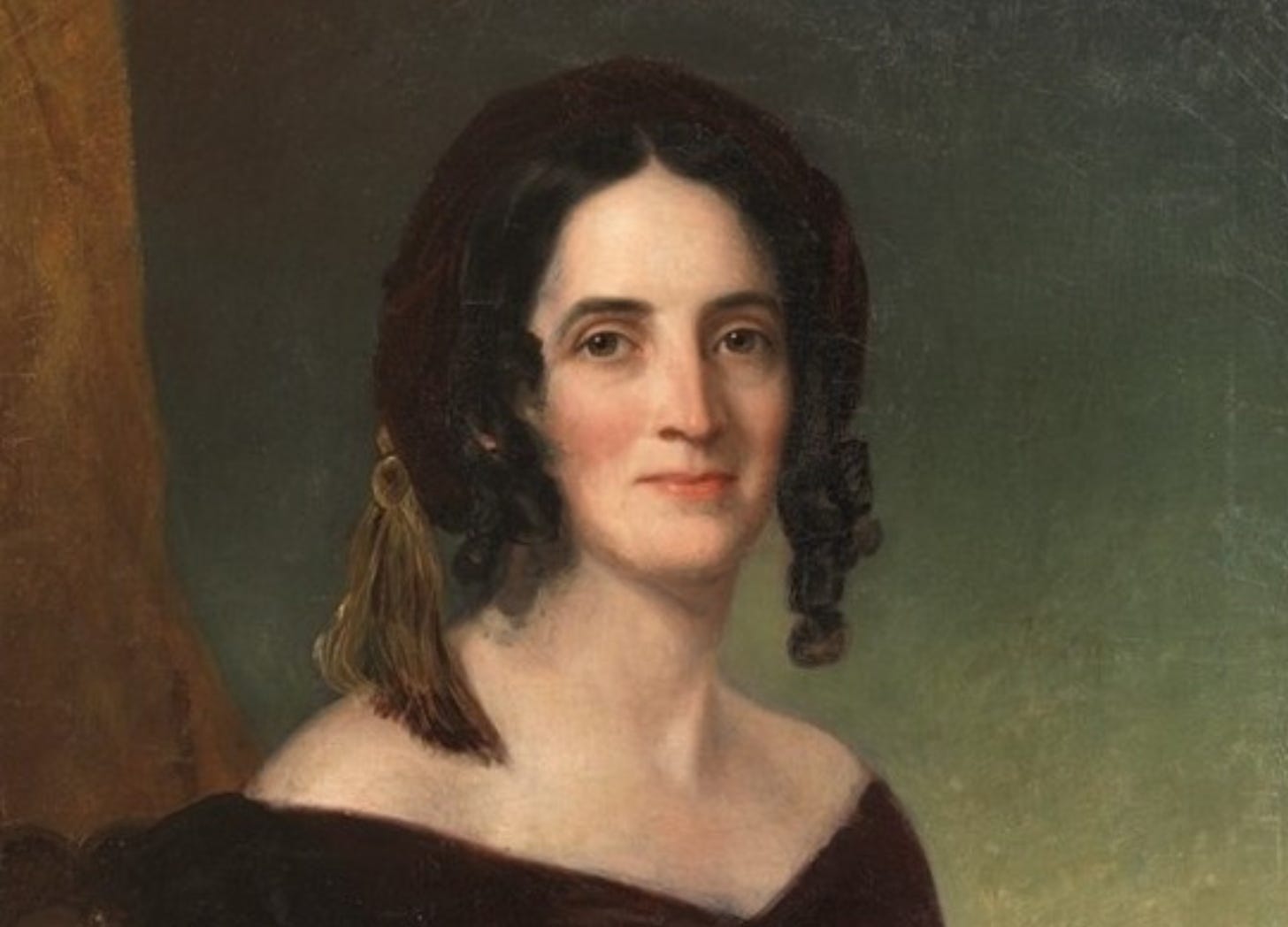
Meet Sarah Polk, a Partner to the President
Historian Amy Greenberg reveals the first lady’s political power outside of the public’s eye as part of the In Pursuit essay series.

Historian Amy Greenberg was deep into researching the U.S.-Mexican War for her book A Wicked War: Polk, Clay, Lincoln, and the 1846 U.S. Invasion of Mexico when another unexpected and mostly unknown historic figure kept cropping up—President James Polk’s wife, Sarah.
Fascinated, Greenberg set out to learn more about the first lady only to find that no other scholar had written about her.
“As a historian, this was exactly the kind of little mystery and challenge that I wanted to follow up on,” Greenberg tells East Wing Magazine in a recent phone interview. “The more I got into researching who Sarah Polk was, looking at her relationships with men, political men, looking at relationships with her family, I just got so excited about her.”
That drove Greenberg to write the very first scholarly biography about the former first lady, Lady First: The World of First Lady Sarah Polk, published in 2019. Up until then, Mrs. Polk was left in the shadows.
But, it is behind the scenes where she was most effective.
Sarah Childress Polk was wealthy, well-connected, unusually well-educated and charming, Greenberg writes in a new essay, “Power Can Be Exercised Through Proximity and Trust,” spotlighting First Lady Sarah Polk’s contributions for the national initiative—In Pursuit. The bi-partisan initiative, created by the Washington, D.C.-based organization More Perfect, which includes an alliance of 43 presidential centers and foundations and educational and civic initiatives from around the country, aims to distill wisdom about leadership and democracy from former American presidents and first ladies.
“First ladies have so much to tell us about how power operated and the things that happened at the time,” Greenberg says.
And, she is quick to point out the state of women in her essay when Sarah Polk stepped into the first lady role in 1845. Greenberg writes, “... women couldn’t vote, serve as ministers, write legislation, or speak freely at political meetings. If married, they couldn’t own property and were considered their husbands’ property. Marital rape was not recognized, and fathers gained custody of children in divorce.”
All of these things were true at the time, she explains.
“Everything is stacked against women in that time period,” Greenberg says. “I think people don’t recognize that now, like they don’t recognize what women’s lives were like.”
In addition to that striking reminder, readers glean how Sarah Polk uncharacteristically navigated the restrictive time period of her husband’s single term as president. She was utterly essential for her husband’s success in politics. She was socially savvy and thrived in Washington, entertaining her husband’s colleagues and becoming friends with most of them, according to Greenberg.
Where Sarah Polk was amicable, her husband was less desirable. As president, James Polk didn’t trust many people, but he trusted his wife. And that’s where Greenberg demonstrates the power Sarah Polk wielded. As first lady, she shielded her husband from his critics in the press and she lobbied congressmen and editors for support. The press noticed her activism but cast it as feminine devotion rather than political power, she writes.
“Nobody really likes talking to James [Polk],” Greenberg says. “Everyone knows that if you tell something to Sarah, she will get it to James.”
Mrs. Polk became the most “politically powerful first lady of her time,” Greenberg notes, because she obscured her influence. Her wealth and social connections were hidden from public view. To the public, she presented one persona and in the private dealings of Washington, another. For instance, Sarah Polk staged media events where she dressed in a reserved manner forgoing gems for a cameo with her husband’s face imprinted on it.
“She dresses down to try and look not elitist,” Greenberg says.
The imagery was in stark contrast, at the time, with growing demands from activists that women are equal to men. Polk was against women’s suffrage.
An important takeaway of the essay, says Greenberg, is that the past is different than what people may think and even though women were considered subservient as a group, the experiences of individual women were varied.
“Some individual women exerted power in ways that seem like it wouldn’t be possible,” she says.


