

Julia Dent Grant Embraced Change
The Ulysses S. Grant National Historic Site commemorates the former first lady’s bicentennial with a yearlong series of events and an exhibit that tells her story.

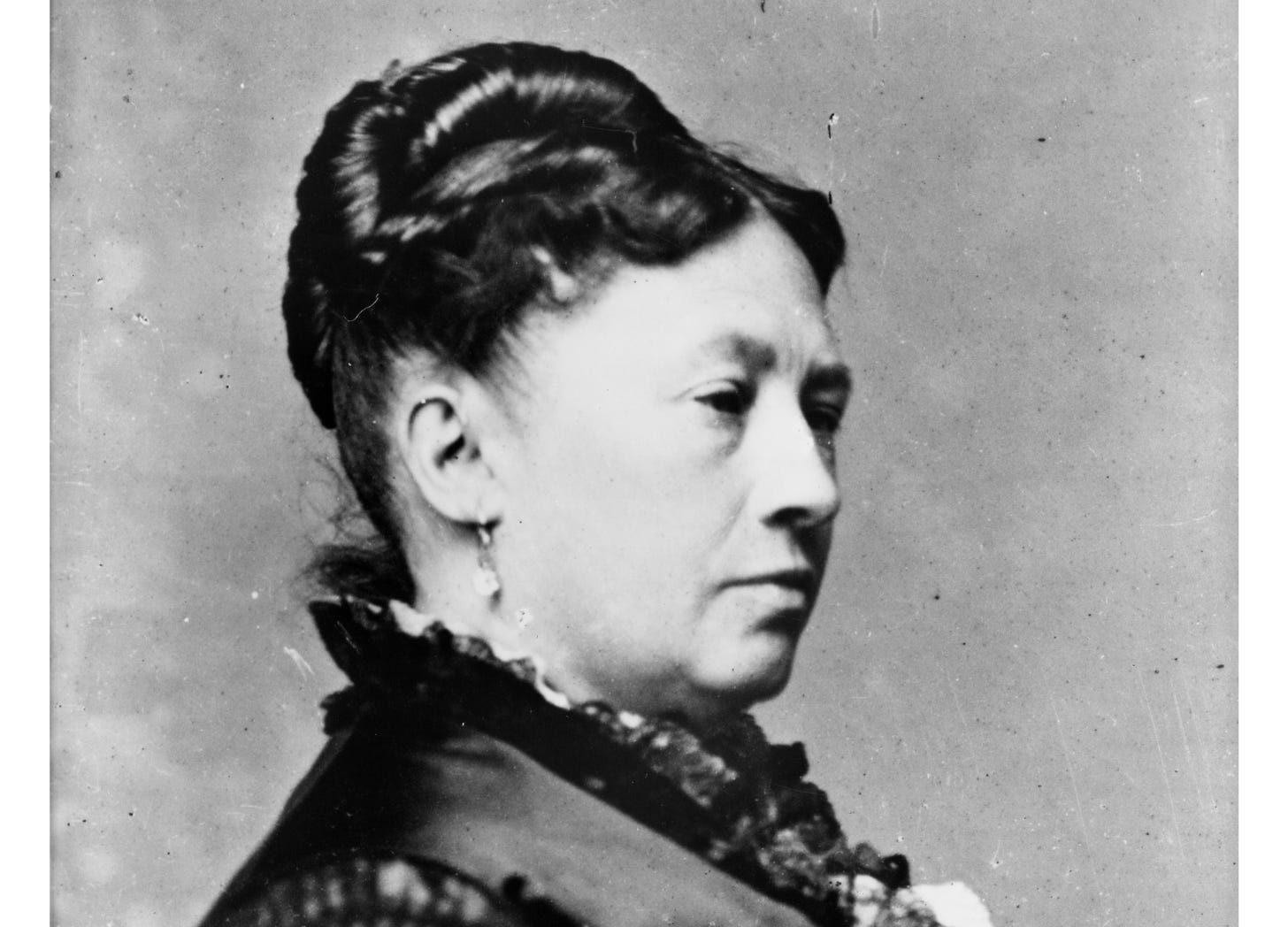
A carefree scene of windswept clouds against a bright blue sky above majestic, blooming locust trees is how Julia Dent Grant begins her historic memoirs. The former first lady and wife of President Ulysses S. Grant, the heroic Civil War Union Army general, vividly recalls her earliest memories with her mother, father and brothers in that bucolic setting on the front piazza of her childhood home, White Haven, in Missouri.
That roughly 10-acre plantation, now formally named the Ulysses S. Grant National Historic Site preserved outside of St. Louis, gives visitors a window into Julia Dent Grant’s formative years. At White Haven, she lived a privileged family life and recalls a “happy home,” which was maintained and supported by enslaved people.
Two-hundred years after her birth in 1826, the National Park Service, which oversees the historic site, is commemorating the former first lady and her bicentennial birth year with a series of events that tell her story. For Julia Dent Grant, those earliest memories of White Haven and her upbringing are, perhaps, what nurtured two of her most defining traits—independence and adaptability.
On Wednesday, Ulysses Grant Dietz, a great-great grandson of the former president and former first lady, will continue the site’s celebration of Mrs. Grant with the presentation “Julia and Ulysses at Home: The Grants in the White House, 1869-1877.” The free, in-person talk will center on Julia Dent Grant’s role as first lady, her impact on the Executive Residence and the places and homes where the Grants lived.
“It’s a great milestone,” Dietz, a former curator studying the material culture of the 19th century, tells East Wing Magazine in a recent phone interview. “She represents, really, the whole story of the European-American woman from the 1820s until the turn of the 20th century.”
Specifically, he notes how his great-great grandmother witnessed a complete transformation of the United States in her 76 years, which included rapid westward expansion, the Mexican-American War, the Civil War, the abolishment of slavery, Reconstruction, industrialization and the women’s suffrage movement.
“[She] embraces it as this is what life is,” he says. “Life is about change and movement and adapting.”
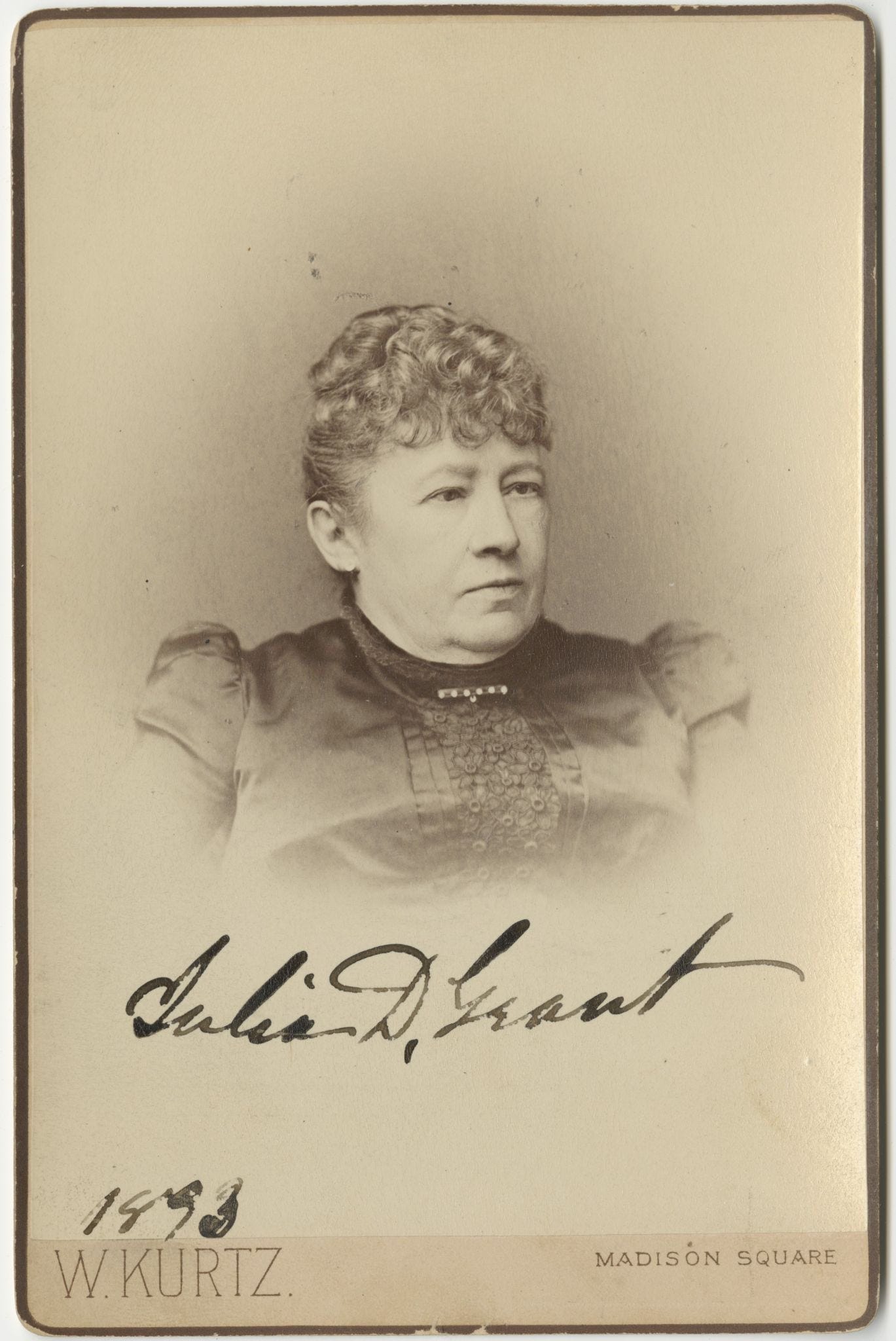
As first lady, Mrs. Grant enthusiastically embraced the role with regular events and informal receptions. At her White House receptions, she chose to greet people who were properly dressed, regardless of their race. Although, Black people never called on her. Scholars surmise security kept them from entering the White House.
She also professionalized the White House staff and organized state dinners as a way for the Grant administration to assert American influence in international affairs, says historian and curator Nick Sacco who works at the Ulysses S. Grant National Historic Site.
“It’s a form of diplomacy, to a certain extent, a form of soft diplomacy,” Sacco says. “Julia is marshaling the assistance of wives of cabinet members, wives of Supreme Court justices, to host these events at the White House.”
The Grants’ eight years in the White House was home to them for longer than any other home they lived in, according to Rob Lippert, lead park ranger and acting program manager for interpretation, education and volunteers at Ulysses S. Grant National Historic Site.
“She grew rather comfortable being the wife of Ulysses Grant as a general, but once she got in the White House, she really made it home,” Lippert says, noting she was “genuinely sad” to leave at the end of her husband’s two terms.
Stories like these about Julia Dent Grant as first lady and her pre- and post-White House life will be the focus of a comprehensive exhibit that is slated to open next month commemorating Mrs. Grant’s 200th birthday, which also corresponds with the yearlong 250th anniversary celebration of America’s founding.
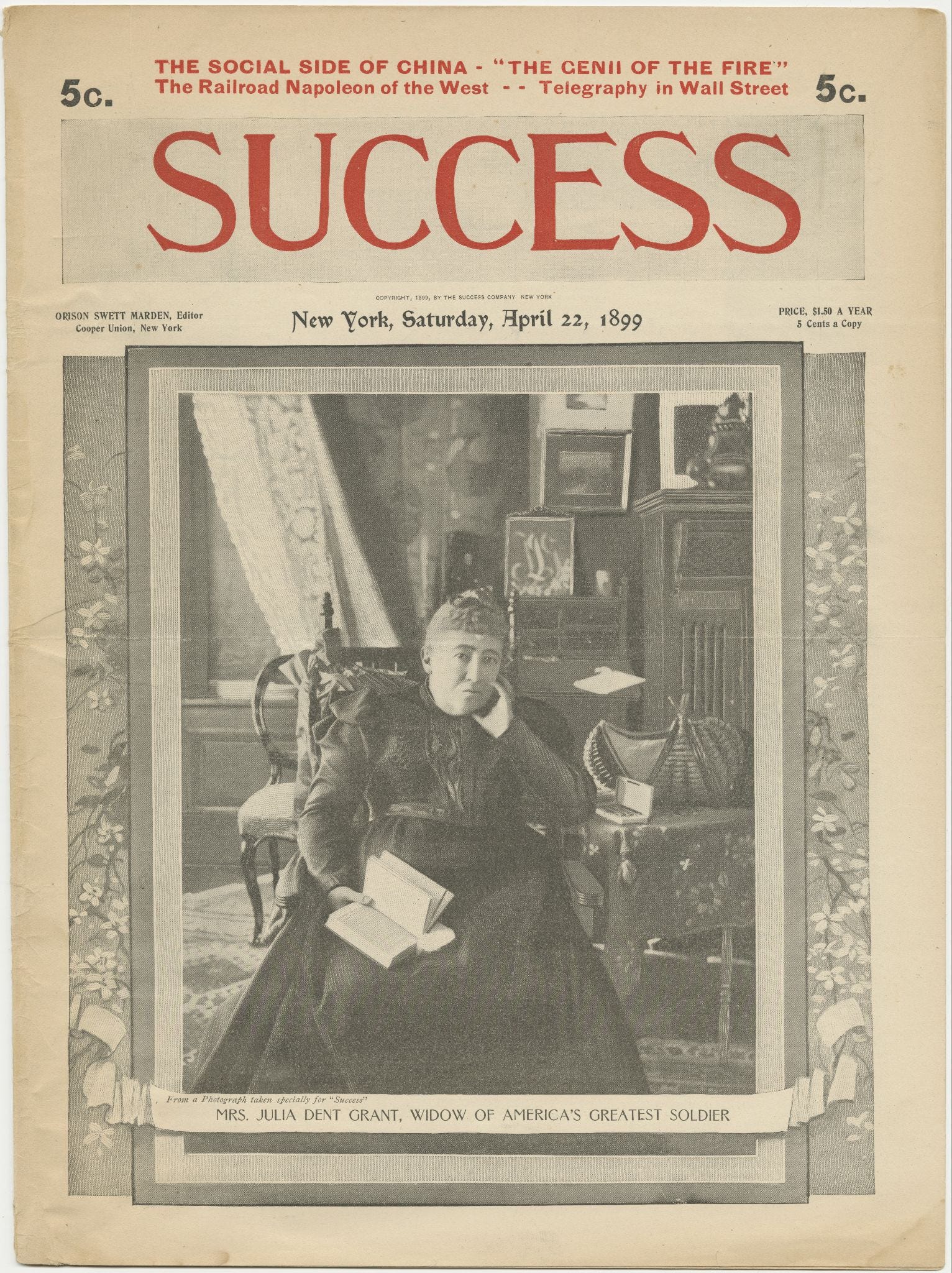
On May 22, Sacco will present a lecture “Julia Dent Grant: A 200 Year Legacy” kicking off the special exhibit, which will run through September 30. The event is notable especially since the site did not feature an exhibit commemorating Ulysses S. Grant’s bicentennial four years ago.
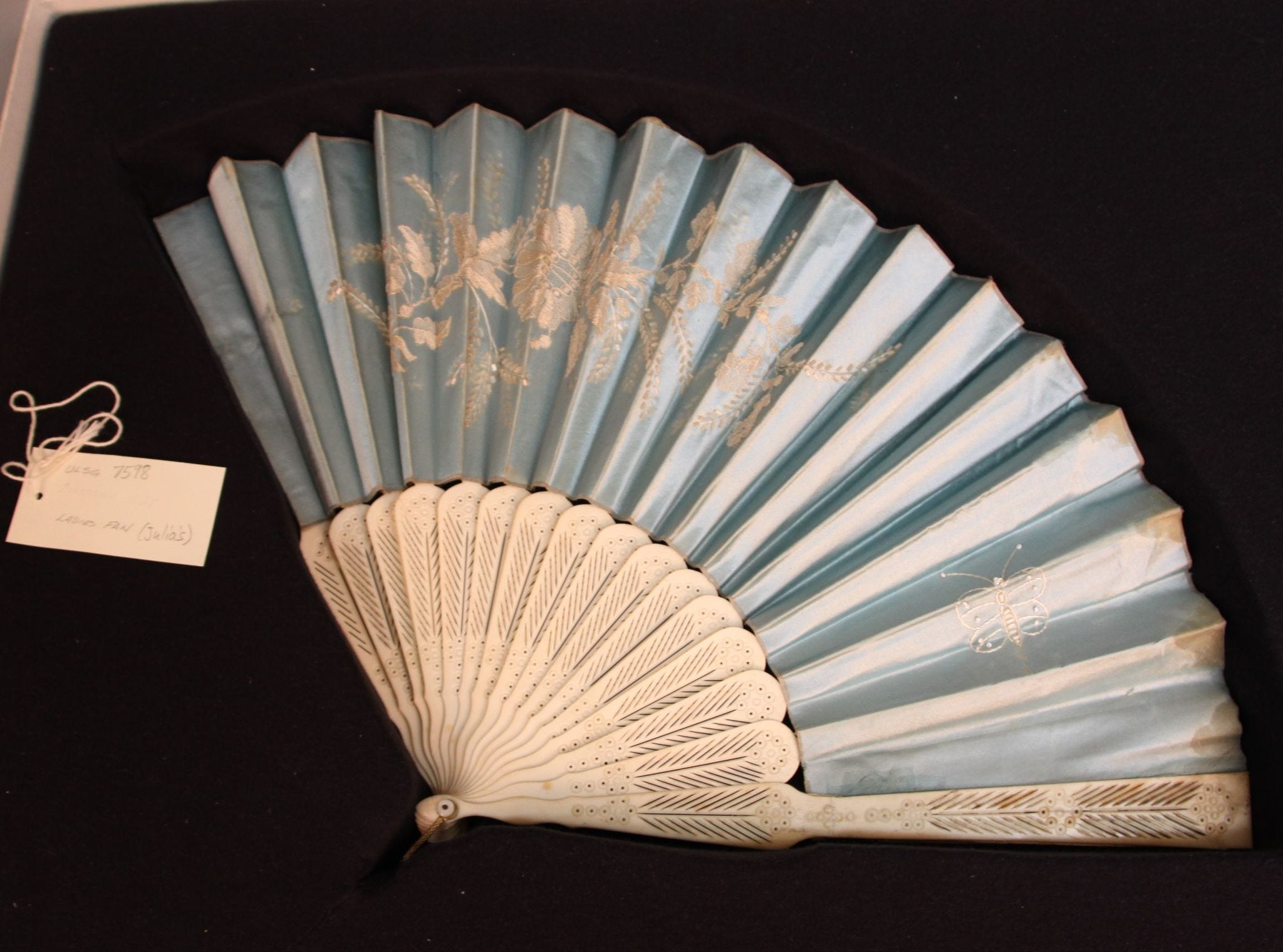
The exhibit, to be featured in the rotunda space of the 1869 horse stable built by Ulysses S. Grant at White Haven, will tell Julia Dent Grant’s story through a series of more than 30 artifacts, many loaned to the historic site from different institutions and individuals. These are artifacts, says Sacco, that have never been displayed in St. Louis. There will be an entire photography section devoted to both Grants as well as two portraits of Julia Dent Grant on loan—one taken with her two eldest sons dating back to 1854 when she was 28 years old.
Also on display will be items from the Grants’ wedding that took place in St. Louis on August 22, 1848; Julia Dent Grant’s photo album from the couple’s two-year world tour after the presidency; and a copy of Mrs. Grant’ first memoirs. With these items, Sacco says, they’re telling a story that helps people appreciate the ups and downs of Mrs. Grant’s life.
“Certainly, she was a child of privilege and certainly she was somebody who was pampered, but at the same time, she experienced the hardships of living on the farm here when [Ulysses] Grant was trying to make it as a farmer here in St. Louis,” Sacco says.
Visitors will also learn more about that fateful night at Ford’s Theatre when President Abraham Lincoln was assassinated. The Grants were invited by the Lincolns to attend that evening, but had declined.
“How difficult that must have been thinking about what might have happened, or the possibility of Ulysses, or both of them, being killed,” Sacco says.
Other challenges in Julia Dent Grant’s life represented in the exhibit include how she adapted and embraced changes about race and slavery after the Emancipation Proclamation freed enslaved people in Confederate states in 1863. Mrs. Grant was disappointed that no African American women showed up to her White House receptions despite instructions that they were open to all.
“You see her go from utilizing enslaved women to welcoming free Black women to the White House and to be on somewhat equal footing with their white counterparts,” Lippert says.
Julia Dent Grant, like many lesser known American first ladies, has been underrated, says Pamela K. Sanfilippo, acting deputy superintendent at Gateway Arch National Park and former historian at Ulysses S. Grant National History Site. For a long time, presidential spouses have been seen as bystanders in a larger political and public realms. But the publication of Mrs. Grant’s memoirs in 1975 have helped reassess her and “rightfully so,” says Sanfilippo.
“She was a woman of her time,” Sanfilippo says. “She wasn’t necessarily active in the anti-slavery movement or women’s right movement. Her main focus was as a mother and wife.”
Home for Mrs. Grant evolved as much as she did. From the moment she left White Haven to travel with her husband to his outposts including New York and Detroit, she adjusted to the “moveable home front,” says Sanfilippo.
Her ability to adapt and change as a result of the experiences throughout her life stand out, she added. From growing up in St. Louis and in the lush countryside at White Haven to ascending to fame as a Civil War general’s wife to a United States first lady, Mrs. Grant embraced the change instead of resisting it.
“That, to me,” says Sanfilippo, “is Julia.”
The bicentennial celebration of Julia Dent Grant at the Ulysses S. Grant National Historic Site at White Haven continues with the following special events:
May 3: The historic site will feature an in-person Ranger Talk on “Julia During the Civil War” from 1 to 2 p.m. local time that discusses Mrs. Grant’s extensive traveling during wartime. During that time period, Mrs. Grant spent most of her time traveling to White Haven to visit her father, to the Grant’s Galena, Illinois, home, and to the front line of the war with children in tow.
June 27: Ranger Talk on “The Grants’ World Tour” from 10 to 11 a.m. local time.
Aug. 22: History Talk on the “Grants’ Wedding” 10 to 11 a.m. local time.
Sept. 12: “Night Walk Living History: Remembering Julia” will feature a living history with performers that will include a portrayal of Ulysses S. Grant who will talk about his love for Julia.
Sept. 17: Hardscrabble and White Haven Open House featuring “Farm to Table Dinner” at Grant’s Farm 4:30 to 8 p.m. local time.
Sept. 19: Hardscrabble and White Haven tours from 9 a.m. to 3 p.m. local time.
Oct. 24: History Talk on “Julia and Fashion Through Photographs” from 10 to 11 a.m. local time.
For more information about the events call 314-842-1867.
Calendar
April 23, 2026
From Poise to Purpose: Pat Nixon, Betty Ford, and the Changing Role of First Lady
The Gerald R. Ford Presidential Foundation presents a birthday event at the Ford Presidential Museum in Grand Rapids, Michigan, on April 23, 2026, to honor First Lady Betty Ford, who turned 108 on April 8.
Betty Ford and Pat Nixon shared more than just the first lady position: they also shared a long history of friendship and mutual admiration. Heath Hardage Lee, author of The Mysterious Mrs. Nixon, will discuss Pat Nixon’s life and times as well as the intertwined fates of Mrs. Nixon and Mrs. Ford, and their contrasting styles as first lady. Read more

April 23-25, 2026
The Missouri Cherry Blossom Festival
Presidential descendants and nostalgic television and film actors will come together in the small town of Marshfield in rural southwest Missouri for a unique blending of American history and culture at the Missouri Cherry Blossom Festival. The event includes a daylong celebration of National First Ladies Day, which this year falls on April 25. Also scheduled are: an appearance at the 16th Annual State Dinner by Ashley Reagan, granddaughter of former President Ronald Reagan; an appearance on National First Ladies Day by Prescott Bush, grandson of George H.W. Bush and Barbara Bush; a “Descendants of the Founding Fathers” panel in honor of the nation’s 250th anniversary of its founding; and also on First Ladies Day, Tweed Roosevelt (Theodore and Edith Roosevelt’s great-grandson) will share memories and speak about the new Theodore Roosevelt Presidential Library in Medora, North Dakota, slated to open on July 4. Read more
April 25, 2026 - National First Ladies Day
April 27, 2026
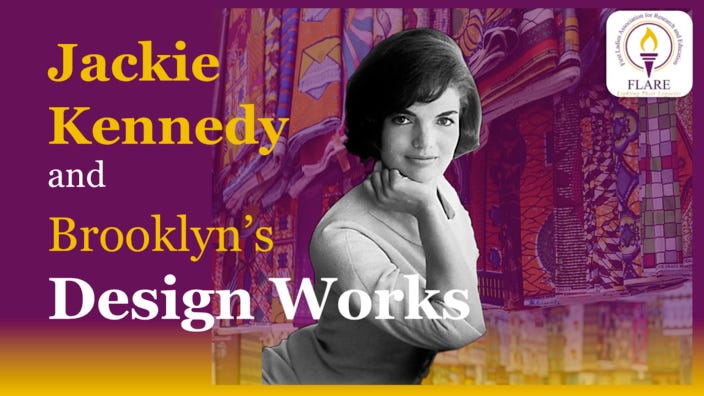
FLARE Virtual Program: Jackie Kennedy & Brooklyn’s Design Works
The First Ladies Association for Research and Education presents “Jackie Kennedy & Brooklyn’s Design Works,” a program featuring Phyllis Ross, an independent scholar of 20th-century decorative arts and design, airing on April 27, from 7 to 8 pm EDT, exploring a little-known chapter in Jackie Kennedy’s post–White House life: her involvement in launching The Design Works of Bedford-Stuyvesant. Read more
May 8, 2026
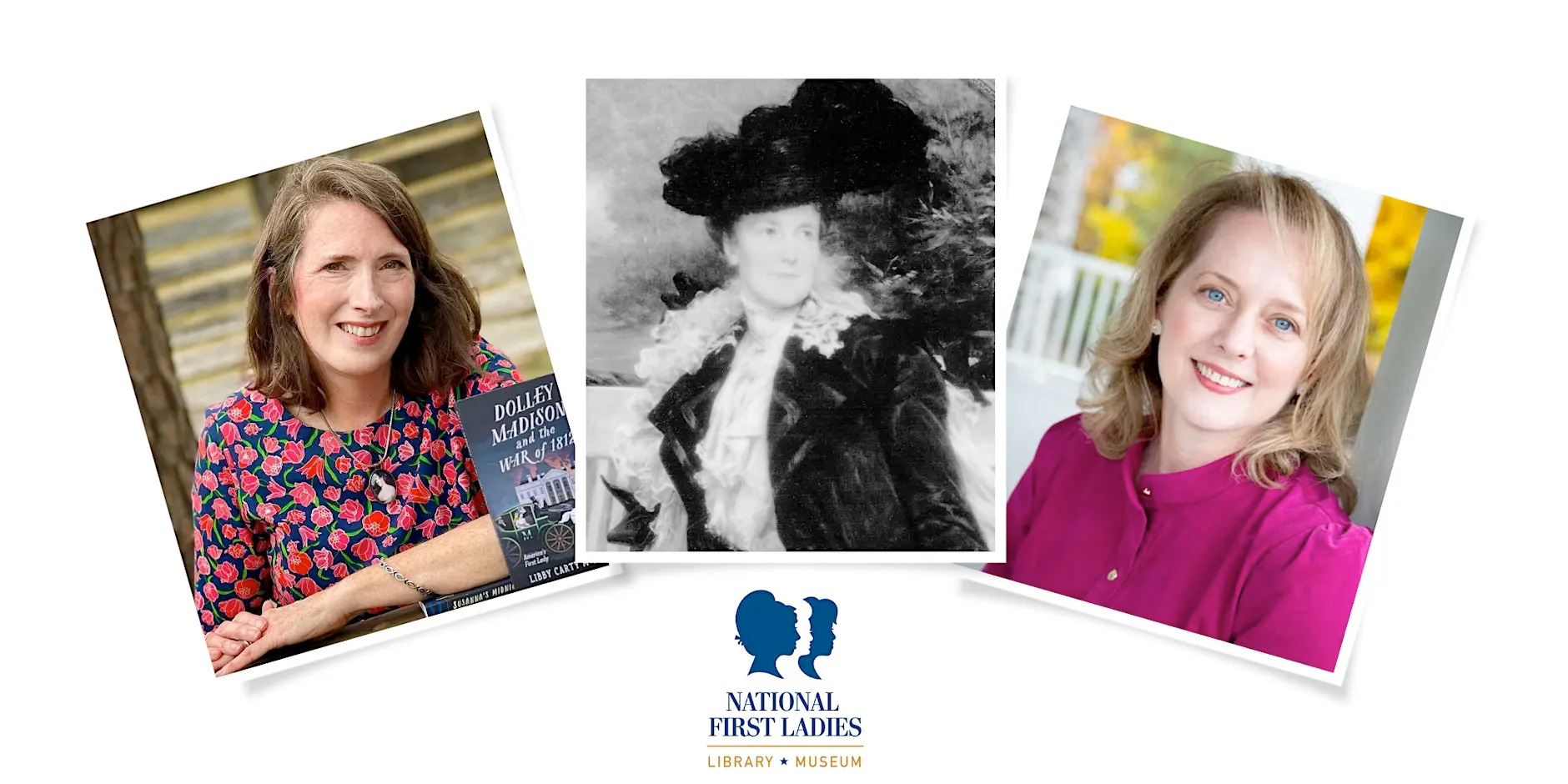
Legacy Lecture: First Mothers
The National First Ladies Library & Museum presents a virtual Legacy Lecture: “First Mothers – Celebrating First Ladies as Mothers in the White House” on May 8 from noon to 1 p.m. EDT. From Dolley Madison to Edith Roosevelt and more, this Mother’s Day-themed program highlights the unique experiences of first ladies as mothers and the enduring impact of their stories. Attendees will also enjoy a Special Mother’s Day Virtual Tea with recipe cards sent in advance and a festive virtual hat contest. Read more
May 13, 2026
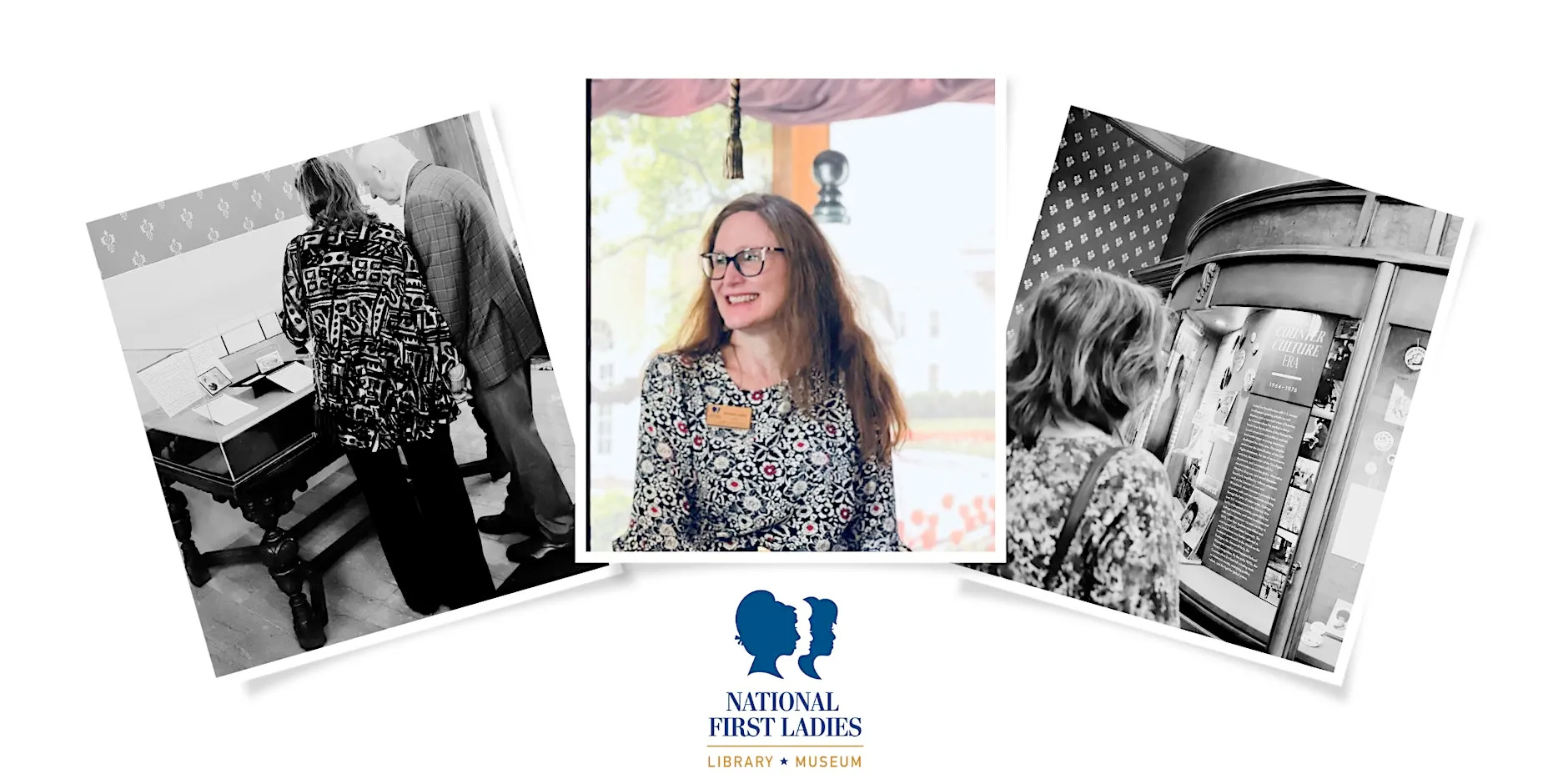
Talk with a Curator
The National First Ladies Library & Museum presents “Talk with a Curator,” a virtual program at 7 p.m. EDT featuring members of the curatorial team sharing insights into how artifacts are acquired, preserved, and interpreted to tell the powerful stories of America’s First Ladies. From research and conservation to exhibition planning, this program offers a deeper understanding of the care and thought behind the collections that connect the public to history. Read more
May 15, 2026
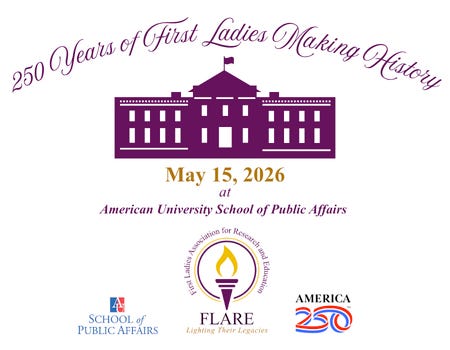
Conference: ‘250 Years of First Ladies Making History’
Registration is now open for the “250 Years of First Ladies Making History,” a conference celebrating presidential spouses, their contributions as part of America’s 250th anniversary of its founding.
The event, sponsored by FLARE and American University’s School of Public Affairs First Ladies Initiative will bring together scholars, teachers, institutions, first ladies staff, biographers, archivists, journalists, historians, students and anyone with an interest in U.S. presidential first ladies for a day-long conference at American University in Washington, D.C.
The conference will take place from 8:30 a.m. to 5 p.m. local time on May 15. Colleen Shogan, former Archivist of the United States and CEO of In Pursuit, will keynote the conference luncheon with an interview by Anita McBride, FLARE founding member, a Gould Award Recipient, co-director of In Pursuit and Director of the First Ladies Initiative at American University. Register here.
May 19, 2026
30th Rosalynn Carter Georgia Mental Health Forum
On May 19, 2026, the Carter Center’s Rosalynn Carter Mental Health and Caregiver Program will convene the 30th Annual Rosalynn Carter Georgia Mental Health Forum, a milestone gathering dedicated to advancing mental health policy, systems, and practice across the state of Georgia. Read more
Send calendar items, press releases and announcements to jtaylor@eastwingmagazine.com.