Architects Make Case for a Smaller White House Ballroom
Upcoming commission meeting draws more than 100 people for public online comment.

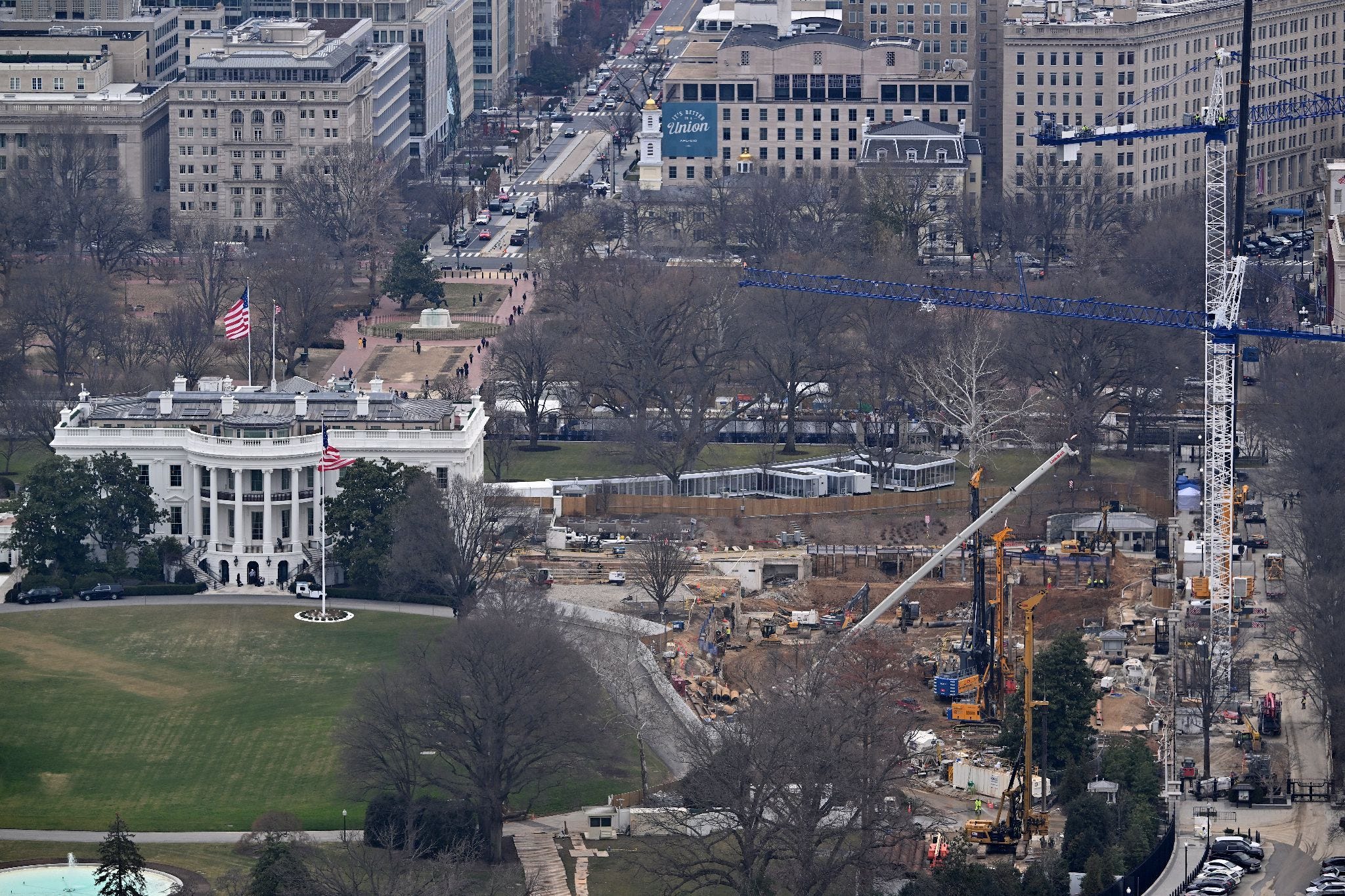
Architects alarmed by the scale and symmetry of the proposed White House ballroom and East Wing Modernization plan held a public webinar last week breaking down the design’s historic and architectural flaws with hopes to offer softer alternatives to the project’s mass and spur outcry in the days leading up to the deadline for public comments ahead of a critical National Capital Planning Commission (NCPC) meeting.
In the webinar presented by the National Trust for Historic Preservation, an organization that has sued the president to halt the project, architects pointed out aspects of the proposal that they say defy the historic planning of the city and the vision of George Washington who commissioned Pierre Charles L’Enfant to design the new federal capital in 1791.
The proposed $400,000, 90,000-square-foot addition currently includes plans for a 22,000-square-foot ballroom. Last month, the U.S. Commission of Fine Arts, an independent federal agency charged with architecturally reviewing such proposed projects that is made up of members newly appointed by Donald Trump, sidestepped the traditional commission protocols to approve both the concept and final East Wing Modernization plan with minor changes despite overwhelming public opposition to the proposal.
In the historic L’Enfant plan, two specific buildings were called out on an axis—the president’s house and the Capitol connected by Pennsylvania Avenue. The axis between the two buildings symbolizes the essential separation and balance of power between the executive and legislative branches of government, according to the National Trust.
Renderings of the East Wing Modernization plan by the White House-hired architect Shalom Baranes shown in the webinar illustrate how the historic axis would be blocked. Essentially, the axis line from the White House residence would intersect with the proposed ballroom.
“We cannot overstate the importance of this axis urbanistically, historically and symbolically,” said David Scott Parker, National Trust trustee and fellow of The American Institute of Architects. “The symbolic connection between the two branches of our government, the legislative and executive, will be interrupted by the new ballroom structure. An axial connection created by L’Enfant at the request of George Washington in 1791 will be forever aborted.”
Also concerning architects in the webinar was the proposed design’s abrupt departure from the White House’s classical design that upholds architectural tenants such as symmetry. Specifically, Parker describes the “considerable mass of both the ballroom and its quite tall new connecting colonnade” as problematic.
“The nonbalance is obvious,” he said.
Another criticism focused on the proposed ballroom’s south portico, which Parker said has no internal connection to the ballroom or the White House kitchen space designed beneath the ballroom. The south portico floor off the ballroom measures about 4,000-square-feet and will contain 24 columns, which Parker said makes the outdoor space nonfunctional and the views from inside obscured.

Instead, the architects suggest downsizing the proposed ballroom from 22,000 square feet to 15,000 square feet, a measurement in line with industry standards for a space accommodating 1,000 seated people, according to Parker. The reduction would also allow for the axis to the Capitol to remain unobstructed.
The NCPC, a panel with a majority of President Trump-appointed members, is scheduled to take up the proposal in an online meeting at 1 p.m. ET on Thursday where the public, preservation experts and architects are expected to speak. The public comment deadline for the upcoming meeting is Wednesday, March 4, at noon ET.
Among the more than 100 people scheduled to speak at the meeting is Carol Quillen, president and CEO of the National Trust for Historic Preservation. Commissioners, staff, applicants, and the public will all participate online, according to the NCPC website. No registration is required to view the meeting online, but registration is required to speak about the project virtually.
Due to the anticipated length of the agenda, the commission meeting will begin at 10 a.m. The East Wing Modernization Project will be last on the agenda and will be taken up no earlier than 1 p.m., according to the NCPC website.


